Bea Nolan here, filling in for Allie. Google DeepMind has been having a difficult year.
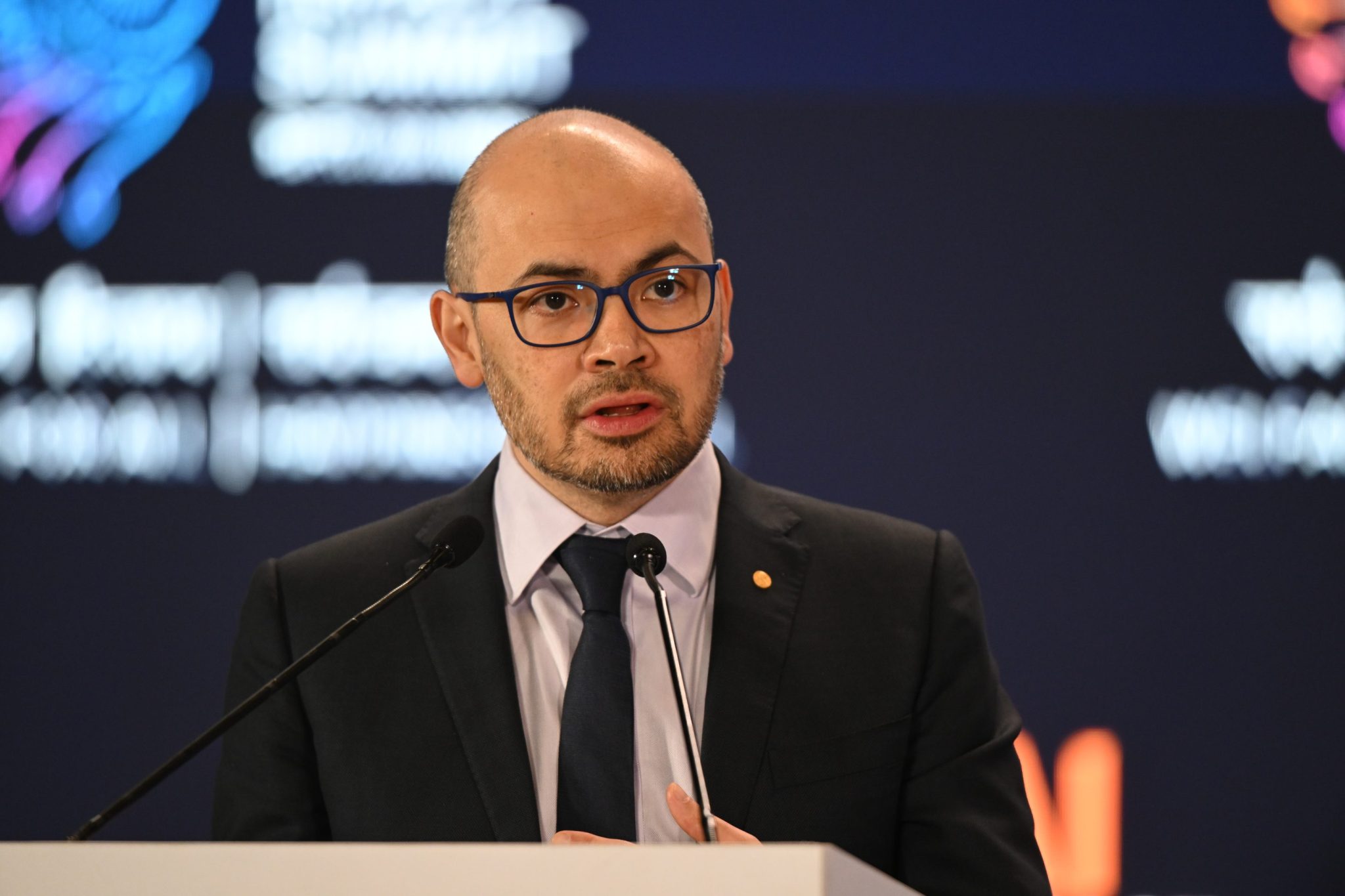
Last week, longtime Google DeepMind CEO and company cofounder Demis Hassabis announced he was stepping back from the CEO role and into a new chair role.
Hassabis ceded day-to-day control to DeepMind’s chief technology officer Koray Kavukcuoglu—who now reports straight to Sundar Pichai, rather than holding a standalone DeepMind chief title. Just minutes later, news broke that chief scientist Jeff Dean was leaving too.
The high-profile exits appeared to be just the tip of the iceberg in DeepMind’s tough year.
Gemini 3.5 Pro, unveiled with fanfare at I/O in May, has now blown through three release dates. Independent benchmarking company Artificial Analysis also told Fortune that Google’s best shipped model, Gemini 3.6 Flash, currently trails Anthropic, OpenAI, xAI, Meta, and at least one Chinese lab on raw intelligence—a reversal from the brief (but memorable) stretch last year when Google actually topped the AI leaderboard.
Several engineers told me the reshuffle compounds a slow-motion pull of power from London, where DeepMind was founded, to Mountain View, where Google is headquartered. They worry losing Hassabis means the longstanding firewall between DeepMind and parent Google is breaking down. (A Google spokesperson disputes that framing, saying London remains central and that DeepMind keeps its research autonomy under the new structure.)
The company is also struggling to keep hold of some of its key talent. In a single week in June, Google lost Gemini co-lead Noam Shazeer to OpenAI and AlphaFold co-inventor John Jumper to Anthropic. Two more AlphaFold veterans, Jonas Adler and Alexander Pritzel, followed Jumper out the door. Engineers blame the exodus on aggressive poaching from cash-flush rivals, frustration at falling behind on coding benchmarks, and engineers chasing pre-IPO equity before rivals go public.
None of this means Google is out of the race. It still has the chips, the cloud, and the distribution that none of its AI-native rivals can touch—structural advantages that could offset a weaker showing at the model layer. But, just four years after Google’s first AI code red, DeepMind is again trying to prove it can move fast enough to keep pace. But this time, it will be doing so without the two figures (Hassabis and Dean) most closely associated with its scientific identity.
Read my whole story here.
See you tomorrow,
Beatrice Nolan
X: @beafreyanolan
Email: beatrice.nolan@fortune.com
Submit a deal for the Term Sheet newsletter here.
Joey Abrams curated the deals section of today’s newsletter. Subscribe here.
VENTURE CAPITAL
– Thrive Holdings, a New York City-based AI holding company that buys professional-services businesses, raised $2 billion from D1 Capital Partners, Altimeter Capital, SoftBank Group, and others.
– River AI, a Palo Alto, Calif.-based developer of personal AI tools, raised $1.1 billion in funding. General Catalyst and AMP PBC led the round and were joined by NVIDIA, AMD Ventures, and others.
– Heaviside Industries, a Los Angeles, Calif.-based defense-tech company developing autonomous munitions, raised $60 million in Series B funding. Felicis led the round and was joined by Hedosophia, Menlo Ventures, Cantos, Flume Ventures, Qstar Capital, Friends & Family Capital, Anorak Ventures, and MVP Ventures.
– Yuno, a New York City-based payments and financial-services software company, raised $45 million in Series B funding. Global PayTech Ventures led the round and was joined by a16z, Tiger Global, QuantumLight, Monashees, Kaszek, and others.
– Gravity, a San Francisco-based ad network for AI products, raised $38 million across seed and Series A funding. Caffeinated Capital led the seed round and Lightspeed Venture Partners led the Series A funding.
– Preview, a San Francisco-based AI-video production software company, raised $12 million in funding. Sequoia led the round and was joined by The General Partnership.
– Genera, a San Francisco-based AI deployment software company, raised $10 million in seed funding. First Round Capital led the round and was joined by BoxGroup, Wndr, Carpenter Capital, and Success Venture Partners.
– Cytix, a Manchester, U.K.-based cybersecurity software company, raised $7 million in Series A funding. Northern Gritstone led the round.
PRIVATE EQUITY
– Astorg acquired the global microbiology business from Thermo Fisher Scientific, a Waltham, Mass.-based life sciences products and services company. Financial terms were not disclosed.
– Atlas Merchant Capital led a minority investment in Edge Focus, a New York City-based consumer-credit technology company. Financial terms were not disclosed.
– Blue Point Capital Partners recapitalized Dumpsters.com, a Westlake, Ohio-based dumpster-rental and waste-services company. Financial terms were not disclosed.
– Goldman Sachs agreed to acquire NEOS Investments, a Westport, Conn.-based ETF platform. Financial terms were not disclosed.
– Marlin Equity Partners acquired Cemplicity, an Auckland, Australia-based patient-experience software company. Financial terms were not disclosed.
– New Heritage Capital acquired a majority stake in PowerRail, an Exeter, Penn.-based aftermarket locomotive-parts company. Financial terms were not disclosed.
FUNDS + FUNDS OF FUNDS
– Team8, a New York City and Tel Aviv, Israel-based venture capital firm, raised $365 million for its third fund focused on Seed- and Series A-stage founders building AI-native companies in cybersecurity, software infrastructure, fintech, and digital health.
PEOPLE
– Northleaf Capital Partners, a Toronto, Ontario-based private equity firm, hired Michelle Joliat as COO. Previously, she was with the Ontario Teachers’ Pension Plan.
#Googles #DeepMind #identity #crisis