For more than a decade, some of the world’s biggest technology companies have spent billions trying to put computers on people’s faces—to minimal success.
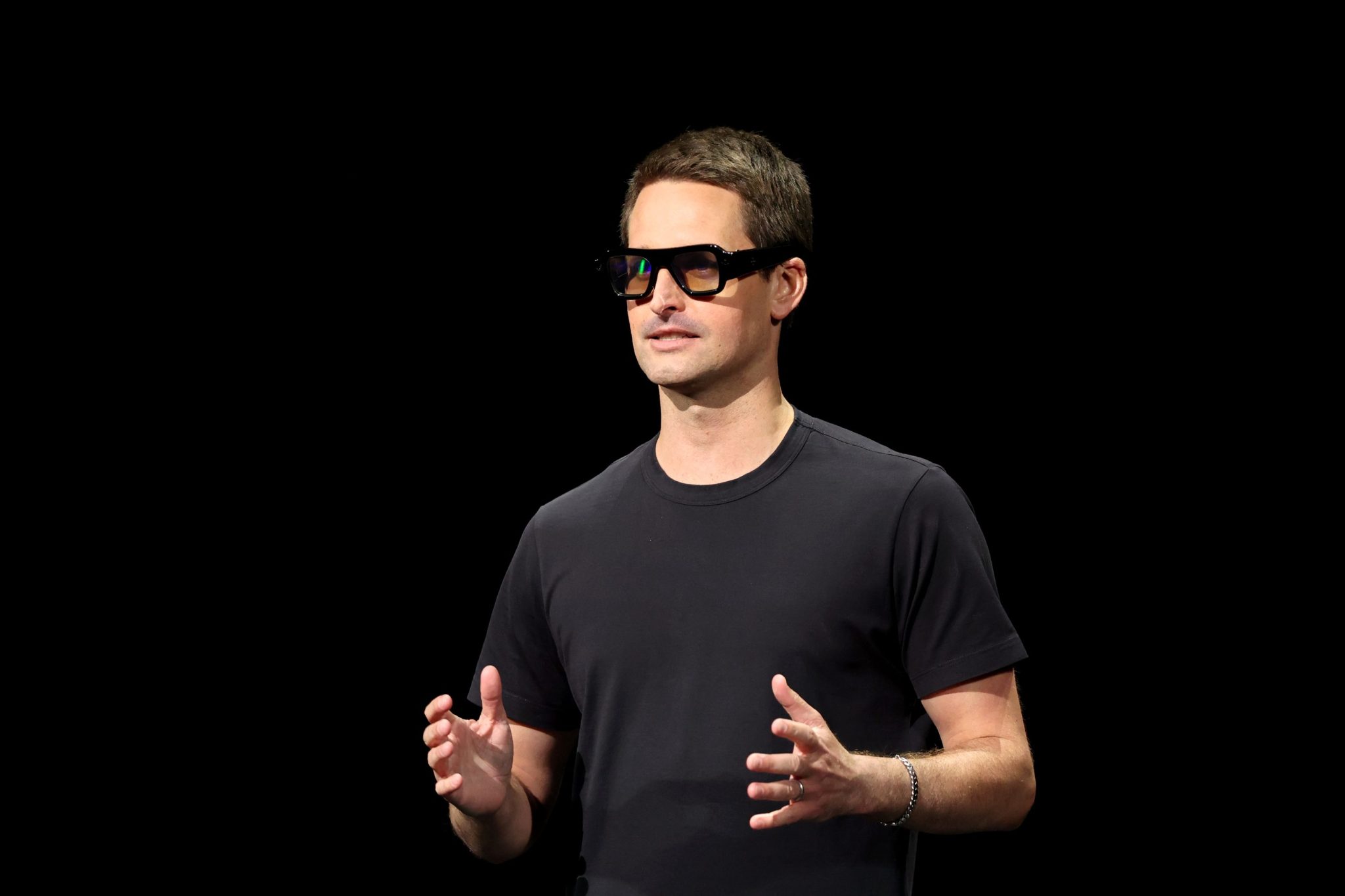
But Snap CEO Evan Spiegel revealed another bet on glasses in June, this time with a $2,195 pair of augmented-reality (AR) specs that he says could usher in a post-smartphone era.
After nearly 20 years, the iPhone has made consumers ready to think differently about computing, he told CNBC at the time, arguing information can be displayed in a person’s vision without them needing to pull out a phone to look down at a screen.
During Snap’s Q2 2026 earnings call last month, Spiegel claimed there has been a “huge amount of interest” in preorders for the new AR glasses, but gave no exact numbers.
It’s not Snap’s first effort at glasses, which haven’t paid off. The company recorded $39.9 million in Spectacles inventory-related charges in Q3 2017 as it wrote down unsold inventory from its first-gen camera glasses.
But Spiegel said Snap’s new Specs have features that make it desirable for businesses—with the glasses operating like “a computer, not a pair of smart glasses for taking photos.”
“A large, private display makes it possible to stream content, cast a screen, open a whiteboard, or turn almost any place into a workspace,” a press release read, announcing the debut of the Snap Specs.
On Wednesday, Snap announced partnerships with Nvidia, Amazon Web Services and Salesforce to bring Specs into workplaces. According to Snap, Salesforce’s Agentforce platform will be integrated into the glasses software, while Nvidia will provide AI capabilities to interpret visual environments. Amazon will provide an AI assistant that can respond to voice commands.
“They’ve got an open-source XR AI platform that a number of businesses are already building on top of,” Spiegel told CNBC on Wednesday. “The goal with both Salesforce and Nvidia is to make it really easy for businesses to get the benefits of those agentic platforms.”
Snap’s current Specs program has reportedly consumed more than $3.5 billion so far. The spending has drawn pushback from activist investor Irenic Capital Management, which has said Specs should be funded on its own.
Such skepticism comes as similar efforts elsewhere haven’t panned out yet.
For example, Meta’s Reality Labs division, which develops virtual, augmented and mixed-reality products, lost about $88.1 billion from 2019 through 2025, according to SEC filings.
Over those same years, the division generated only about $12.3 billion in revenue—working out to roughly $7.15 of operating loss for every $1 of revenue generated.
Google also attempted AR glasses with Google Glass. The company released the products in 2014 at a price of $1,500, but then pulled the glasses from shelves in the following year.
This led Google to retreat to enterprise customers, but that second life eventually ended too: Glass Enterprise Edition was pulled in 2023, with support being terminated months later.
#Snap #betting #billion #glasses #businesses #Evan #Spiegel #sees #postsmartphone #era