President Donald Trump signaled he’s in no hurry to make a deal with Iran and rejected Tehran’s latest proposal, as the U.S. military facilitates the transit of more oil through the Strait of Hormuz.
The Islamic Republic had reportedly offered a seven-day ceasefire, during which it would fully reopen the strait and resume nuclear talks. In return, the U.S. would lift its naval blockade, unfreeze Iranian assets, and end sanctions on its oil exports.
“They want to make a deal and I think that’s fine,” Trump told reporters outside the White House on Saturday, saying Iran is “losing so badly.” “I’d like to make a deal, too. But that deal would not be acceptable.”
In addition, he has privately told aides that he expects to resume bombing Iran after the midterm elections when high gas prices will be less of a political consideration, according to the Wall Street Journal.
Such bravado comes as U.S. officials believe time is now on their side and no longer on Iran’s side. The U.S. naval blockade is crushing Iran’s economy, and new financial sanctions are tightening the screws even more. At the same time, oil markets have been much more resilient than expected.
While crude prices remain high, with refined fuels facing a bigger shock, markets have yet to see catastrophic extremes, even as the Iran war and the strait’s closure approach their eighth month.
That’s because the strait is only partially closed with more oil getting out in recent weeks under the protection of the U.S. military.
On Wednesday, Tanker Trackers estimated that the total amount of crude oil exiting the U.S. blockade line is now 13 million barrels per day.
“The numbers have doubled in less than a month,” it said in a post on X.
That’s partly due to Saudi Arabia shifting its oil shipments back through the Persian Gulf, Tanker Trackers added, after previously diverting them via the East-West Pipeline for export from Red Sea ports.
But attacks by Iran-backed Houthi and Iraqi fighters on Saudi oil infrastructure prompted Riyadh to hold off on using that bypass.
Tanker Trackers also attributed the recent surge in oil coming out of the Persian Gulf to daytime transits via the Strait of Hormuz with U.S. Central Command’s help.
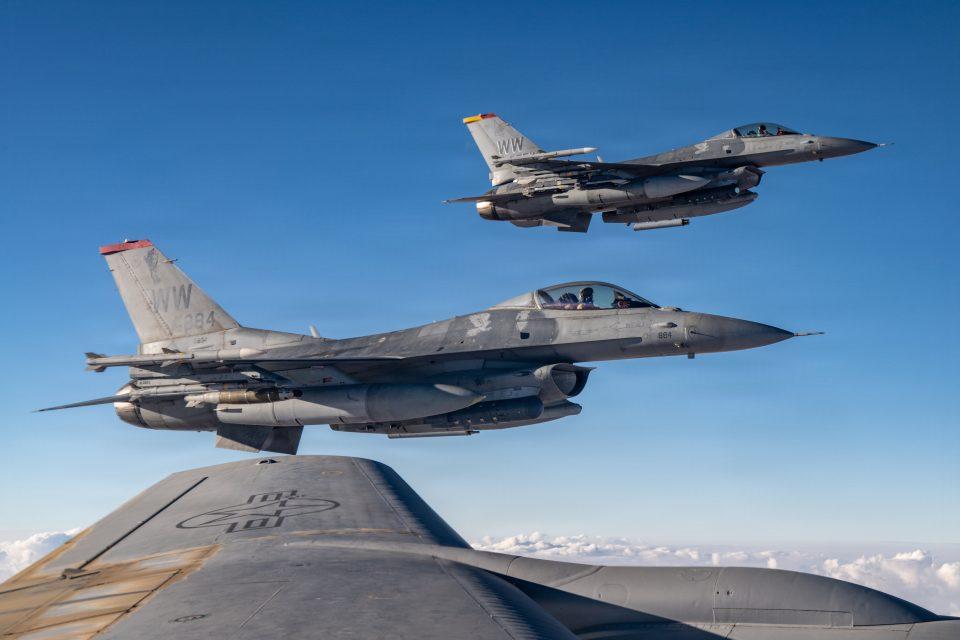
U.S. Air Force photo by Tech. Sgt. Tiffany A. Emery
Similarly, oil expert Rory Johnston estimated that about 13.5 million barrels a day are now clearing the strait, based on the latest seven-day average.
That’s still well below prewar levels, forcing global reserves to drop further toward critical lows, but it’s about the same as the brief peak in July, when a U.S.-Iran ceasefire allowed traffic to rebound.
The respite quickly fell apart, and attacks on shipping resumed. The U.S. military continued guiding ships through the contested waterway, but those operations took place at night to lessen the odds of being targeted by Iranian missiles and drones.
The nighttime restriction limited how many ships could get through each day. Then the U.S. military conducted a series of airstrikes that degraded Iran’s ability to detect commercial vessels attempting sneak out. The Navy also cleared mines from the strait’s main corridor.
With the Iranian threat against ships now waning, a U.S. official told Axios earlier this month that the military and Gulf countries began conducting daytime transits of tankers through the strait.
To be sure, it’s expensive to move oil through the strait amid the ongoing threat of Iranian attacks. Shipping companies must pay crews more to take on the added risk, while insurance coverage also is costlier.
“I continue to stress that while a lot of oil is getting out of Hormuz the cost of getting those barrels out is very high ($30-40+/bbl, excluding the cost of the US military),” Johnston pointed out. “That doesn’t work if global prices fall (or Gulf exporters try to press their prices higher)”
#helps #double #oil #volume #exiting #Gulf #military #guiding #ships #broad #daylight