By many measures, China is fast catching up with the U.S. in AI development. Moonshot’s Kimi K3—the world’s largest open-weight model—has approached the performance of America’s frontier systems. Analysts estimate the best Chinese models are now just four months behind the most sophisticated releases from OpenAI and Anthropic, compared to seven months at the start of the year.
Chinese models have gone from 1.2% of token traffic (a common way to calculate AI usage) in 2024 to more than half of the total by the summer of 2026.
But the biggest threat to that next wave is not technology. It’s money. Between 2023 and 2026, venture funding into U.S. AI companies topped $380 billion; China’s start-ups received barely a tenth of that figure, according to Boston Consulting Group.
Funding the future
In the past, Chinese entrepreneurs looked to state guidance funds and venture capital backing, but policy-driven funds are known to prioritize later-stage startups while early-stage venture capital is only just recovering from a three-year fundraising drought.
There are three reasons why broader funding channels should be a priority for entrepreneurs in the AI economy.
First, inflation is taking hold inside the AI economy. CXMT, for example, has been raising memory prices for months and held firm even when Huawei, one of its largest customers, demanded relief.
The war for AI talent is just as fierce: postings for AI-related roles surged roughly twelvefold year-on-year in early 2026. Algorithm engineers specializing in large language models command some of the highest pay packages of any technical role in China.
Founders must also outcompete deep-pocketed former employers and U.S. rivals. More than half of studies presented at the world’s top AI conference had lead authors based in China. China’s AI talent is known to be in demand worldwide.
Second, external funding is scarce. Venture investment in China totaled just $20 billion in the first quarter of 2026, against $267 billion in the U.S. China has raised impressive sums this year—assets under management for newly registered VC funds hit 154 billion yuan ($22.8 billion) in the first five monthes, already exceeding last year’s total—but that is still far below what US venture capital regularly deploys.
Meanwhile, China’s state banks, although directed to prioritize technology lending, are absorbing rising non-performing loans elsewhere on their books, which could lead to weaker overall credit supply.
Third, profitability will take a while to achieve. Chinese enterprise software firms primarily sell into the domestic market, which limits their revenue base. U.S. rivals have a head start: a global customer base, stronger brand recognition, and R&D budgets deep enough to fund everything from enterprise-grade cybersecurity to polished customer experience design.
To be sure, the next generation of AI ventures may not need vast amounts of capital to build applications on top of existing models or fill the gaps in the tech value chain. Enterprise customers can also provide essential development funding.
Entrepreneurs must nevertheless cope without the kind of financial support that is available for the AI sector in the U.S. Closing the performance gap increasingly depends on bulking up in-house computing capacity—yet China’s AI infrastructure spending remains a fraction of what is being spent in the U.S.
Private market alternatives
This is where access to Hong Kong’s finance industry will play a growing role. Its capital markets remain one of the few channels still capable of moving global capital toward Chinese enterprise at scale. More than 430 applicants are in the IPO pipeline in the second half of 2026.
The IPO pipeline, however, tells its own story. Many Chinese technology startups are choosing to list earlier than the previous generation of companies did because they lack an alternative.
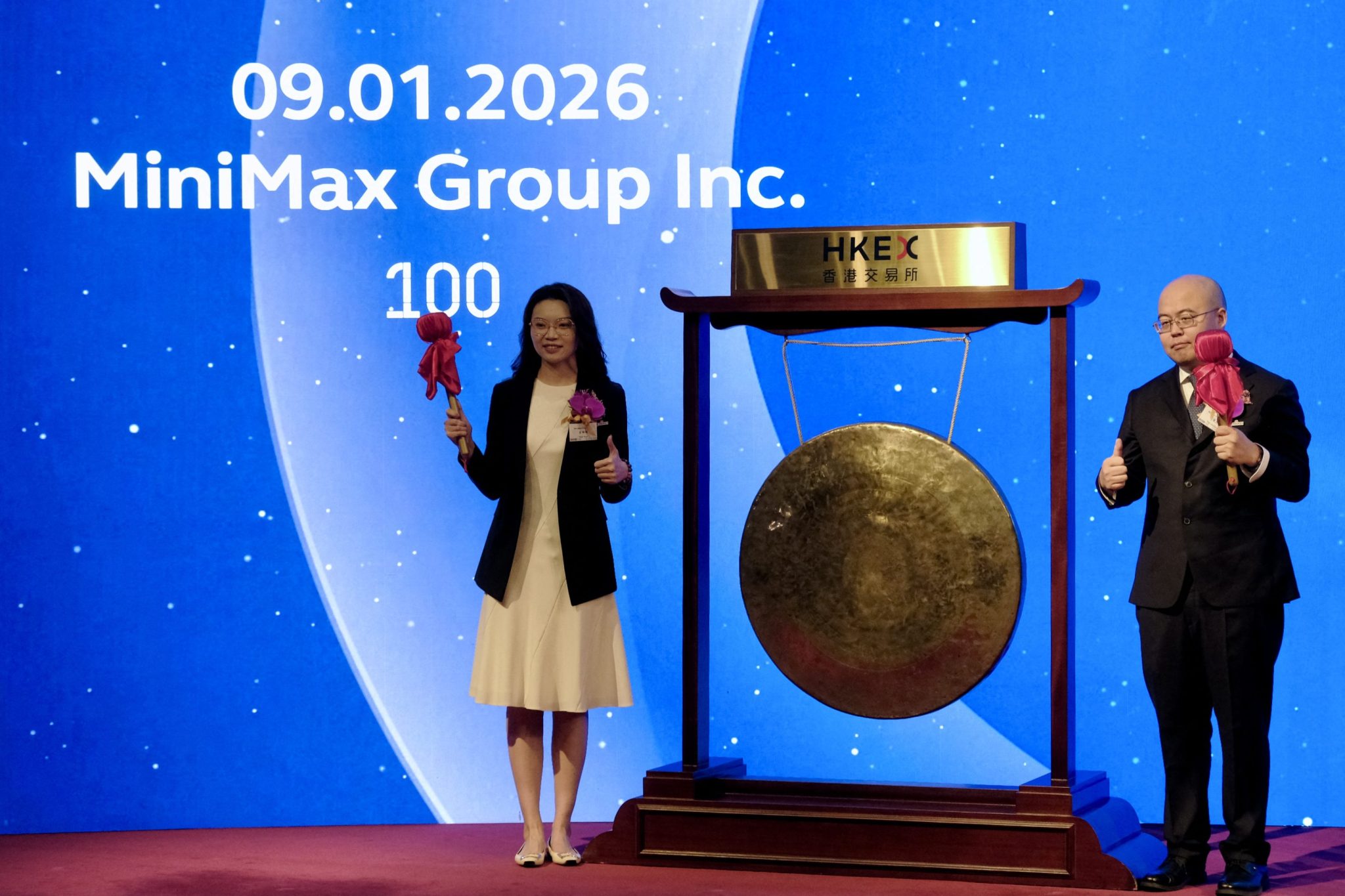
Compare that with the U.S., where the likes of OpenAI and Anthropic have grown to an enormous scale by raising private capital. OpenAI closed a round of more than $100 billion earlier this year, while Anthropic raised $65 billion in May. China’s leading model developers, Zhipu AI and MiniMax, beat OpenAI and Anthropic to the public markets—but their Hong Kong IPOs in January raised just $558 million and $620 million respectively, despite heavy over-subscription.
Private credit is another route. Asia-Pacific private credit assets are projected to grow from $59 billion in 2024 to $92 billion by 2027, with China accounting for a fifth of the region’s activity. However, these loan providers tend to prioritize bigger or established companies.
It is already clear that the AI sector, unlike the software sector, will not be dominated by U.S. firms alone. China’s startups have learned the lessons of the previous decade, commanding global respect and winning a growing customer base. The country’s open-weight strategy has given its leading AI companies a cost advantage – even Silicon Valley leaders acknowledge it.
For China’s latest generation of AI entrepreneurs, venture capital and bank loans—the two main sources of start-up funding – may not be enough in the coming years. Keeping pace in the AI race will require using every asset and every channel available. It may mean a public listing earlier than they would have preferred, exploring the growing private credit ecosystem, revenue sharing with customers or leveraging the equity they hold as collateral.
The entrepreneurs involved in the next wave of China’s AI development will need to be creative with funding to maintain their competitive edge at a time when overseas rivals are spending 10 times as much.
The opinions expressed in Fortune.com commentary pieces are solely the views of their authors and do not necessarily reflect the opinions and beliefs of Fortune.
#Chinas #startups #turn #IPOs #private #credit