Heritage Foundation chief economist EJ Antoni joins Mornings with FOX Business analyze the Congressional Budget Office report showing the federal budget deficit approaching $2 trillion in fiscal 2026 and tech company annualized revenue reporting.
The federal government’s budget deficit totaled $2 trillion in fiscal year 2026 as the cost of servicing the nation’s more than $40 trillion national debt surged.
The nonpartisan Congressional Budget Office (CBO) released data on Thursday showing the federal budget deficit rose to $1.993 trillion in fiscal year 2026, which concluded at the end of September.
That figure represents a $218 billion increase from the $1.775 trillion deficit in fiscal year 2025, which amounts to an increase of 12%.
While federal tax receipts increased 3% to more than $5.4 trillion in fiscal year 2026, the growth in revenue was outpaced by the 6% rise in federal spending, which was nearly $7.4 trillion in the CBO’s preliminary data for fiscal year 2026.
REDUCING THE $2T FEDERAL DEFICIT COULD LOWER INFLATION, INTEREST RATES FOR AMERICANS: CRFB
The budget category that saw the largest spending increase in fiscal year 2026 was net interest expenses on the national debt, which rose by $115 billion, or 11%, from a year ago. The increase was due to the national debt being larger this past year than it was in fiscal year 2025, and because long-term interest rates were higher.
Spending on Social Security benefits also rose $86 billion, or 5%, due to increases in average benefits and in the number of beneficiaries. CBO noted the increase would’ve been larger but for a significant set of one-time retroactive payments under the Social Security Fairness Act.
Medicare spending rose by $77 billion, or 8%, because of increased enrollment and higher payment rates; while Medicaid spending also rose $55 billion, or 8%, due to rising costs per enrollee.
DSA PLATFORM COULD COST UP TO $212T OVER A DECADE, ANALYSIS FINDS
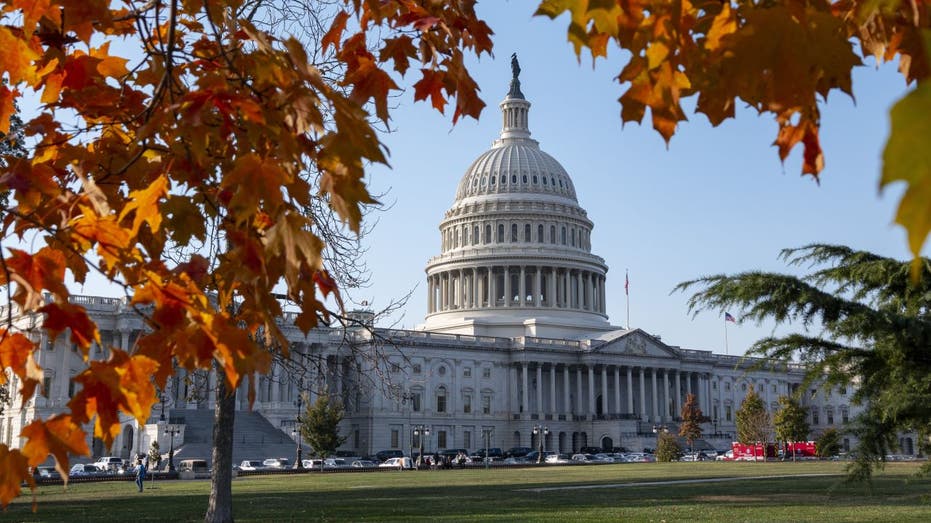
The federal budget deficit hit $2 trillion in fiscal year 2026, the CBO said. (Kevin Carter/Getty Images)
The Department of War’s spending on military activities was $48 billion, or 5%, more than in fiscal year 2025 – with the largest increases in spending on research and development and military personnel.
Department of Education spending rose $41 billion, or 117%, driven largely by differences in the amounts recorded for the estimated costs of outstanding student loans. A reduction of $131 billion was recorded in September 2025 because of program modifications in the One Big Beautiful Bill Act (OBBBA) – and the 2026 modification was significantly smaller, resulting in a year-over-year increase.
The largest increases in tax revenue came from individual income and payroll taxes, which rose by $255 billion, or 6%, from the prior year. Amounts withheld from workers’ paychecks rose by $168 billion, or 5%, while non-withheld payments rose $108 billion, or 9%.
That was partially offset by higher individual income tax refunds, which grew by $16 billion, or 5%, in the latest fiscal year due to provisions in the OBBBA.
TRUMP’S $5,000 DIVIDED PROPOSAL COULD ADD $1.2T TO FEDERAL DEFICIT, ANALYSTS SAY
Tax receipts from corporate income taxes decreased by $70 billion, or 16%, because of larger deductions for certain investments in the OBBBA which reduced some payments and offset the increases in receipts that otherwise would’ve been expected.
Collections of customs duties, including tariffs, fell by $22 billion, or 11%, in fiscal year 2026 compared with the prior year. CBO noted that larger amounts were collected early in fiscal year 2026, but started to decline in May when the Trump administration began issuing refunds after the Supreme Court struck down the IEEPA tariffs.
Maya MacGuineas, president of the nonpartisan Committee for a Responsible Federal Budget, said in a statement that the fiscal year 2026 deficit “ranks among the highest deficits in our history – and the highest ever outside of a war or recession.”
CLICK HERE TO DOWNLOAD THE FOX NEWS APP
“A new fiscal year means an opportunity for change, and though it is not always easy, it is necessary. Policymakers can start by adopting an attainable goal – such as bringing deficits down to 3% of the economy, or about half of where they are today – and commit to achieving it, which can be done through a bipartisan fiscal commission that examines all areas of the budget,” MacGuineas added.
#Federal #budget #deficit #hits #trillion #national #debt #costs #surge