Neoliberalism is over. Around the world, the populist left and right are rejecting it. As a political term, it’s a dead man walking, even as its market-based policies still shape major economies. This isn’t a eulogy for free enterprise, which Americans strongly support. It’s a eulogy for a word that has lost its meaning and stands in the way of a real debate about markets and the role of government.
In the Wall Street Journal, James Lloyd Dusenbury recently argued that our political vocabulary, including communism and capitalism, is obsolete. Neoliberalism belongs on the list, too.
Start with the obvious: no one agrees what it means. Even Stanford’s Encyclopedia of Philosophy doesn’t offer a single definition.
To its defenders, it’s the belief that markets work better than governments, which have a limited role in regulating capital and distributing wealth. To its detractors, it’s shorthand for whatever they dislike about global capitalism: billionaires, technocrats, Silicon Valley, immigration, even Pete Buttigieg.
In short, it’s a zombie word.
Second, no one identifies with it. There are socialists, libertarians, progressives, and conservatives. Where are the neoliberals marching in the streets? Like neoconservatism, it’s a label used in academia, media, and think tanks, not real life.
Third, it’s a Frankenstein word, and at seven syllables, a long one. “Neo” means new. Liberalism can mean anything from Adam Smith to LBJ. New Liberalism? No wonder people are confused.
So, what are we really talking about?
When the populist left says neoliberalism, it usually means high prices, billionaires, and corporate power. When the populist right says it, it usually means trade, immigrant labor, or technocrats.
Look at France. Emmanuel Macron, long the face of French neoliberalism, is leaving office very unpopular, and polls say voters are looking to the far left and right for his successor. Even Canada’s Mark Carney, a hero to many Democrats for standing up to President Trump, has been tarred by the left as a neoliberal.
What does neither side mean? Free enterprise.
According to Gallup, 77% of Americans view free enterprise favorably. Just 55% say the same of capitalism. The gap suggests Americans distinguish between the two. The distinction is especially sharp among Democrats. Despite all the talk of their socialist turn, 65% view both socialism and free enterprise positively, while only 35% view capitalism that way. They don’t see the first two as mutually exclusive.
Big business, however, stands at just 35%, behind socialism at 43%. Small business, by contrast, scores 95%. This suggests the public’s real objection is corporate power, not enterprise itself. Even Gallup concludes the numbers don’t point to a “wholesale movement away from markets and toward socialism.”
Here, socialism and neoliberalism share the same brand problem. Many Americans support policies associated with socialism, like expanded health coverage, while most oppose it as an economic system. Although they’ve cooled a bit on capitalism in recent years, they still associate free enterprise with choice, innovation, and personal advancement.
So, are Americans closet socialists or closet neoliberals? Economic swingers, perhaps? The truth is these labels don’t describe what they really want.
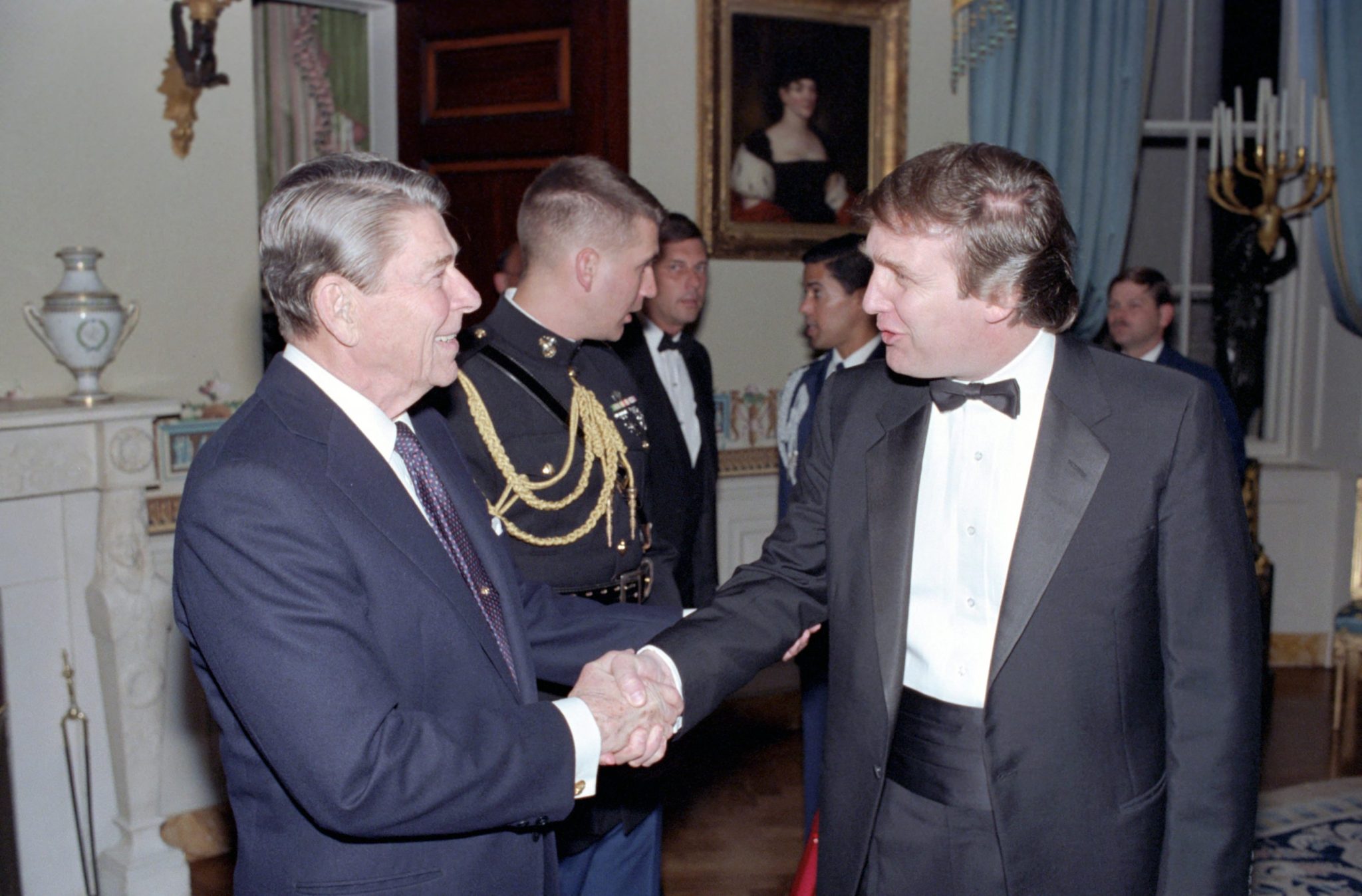
As Dusenbury points out, words change. During the Reagan-Thatcher and Clinton-Blair years—neoliberalism’s apex—it meant deregulation, international trade agreements, or the Washington Consensus. Now it’s a pejorative, a way to signal “this is bad” without saying what or why.
That’s a problem, because there are real policy questions that need answers. Do Americans want free enterprise with bigger guardrails, a Nordic-style welfare state, or state-directed industry? How open should trade be? Those are choices voters can debate. They can’t debate a word that means billionaires to one group and Uber Eats to another.
So, say what you mean. If you want to criticize corporate power, call it that. If you oppose data centers or H-1B visas, explain why. If you want better health care, advocate for it.
Neoliberal policies will continue, whatever we call them. Even as some Americans look fondly to Canada and Western Europe, with their generous welfare states, these countries have market economies with plenty of private enterprise. Where, exactly, is this magical, market-less world on a map?
As a word? Neoliberalism is history.
The opinions expressed in Fortune.com commentary pieces are solely the views of their authors and do not necessarily reflect the opinions and beliefs of Fortune.
This story was originally featured on Fortune.com
#RIP #neoliberalism #ghosts #live