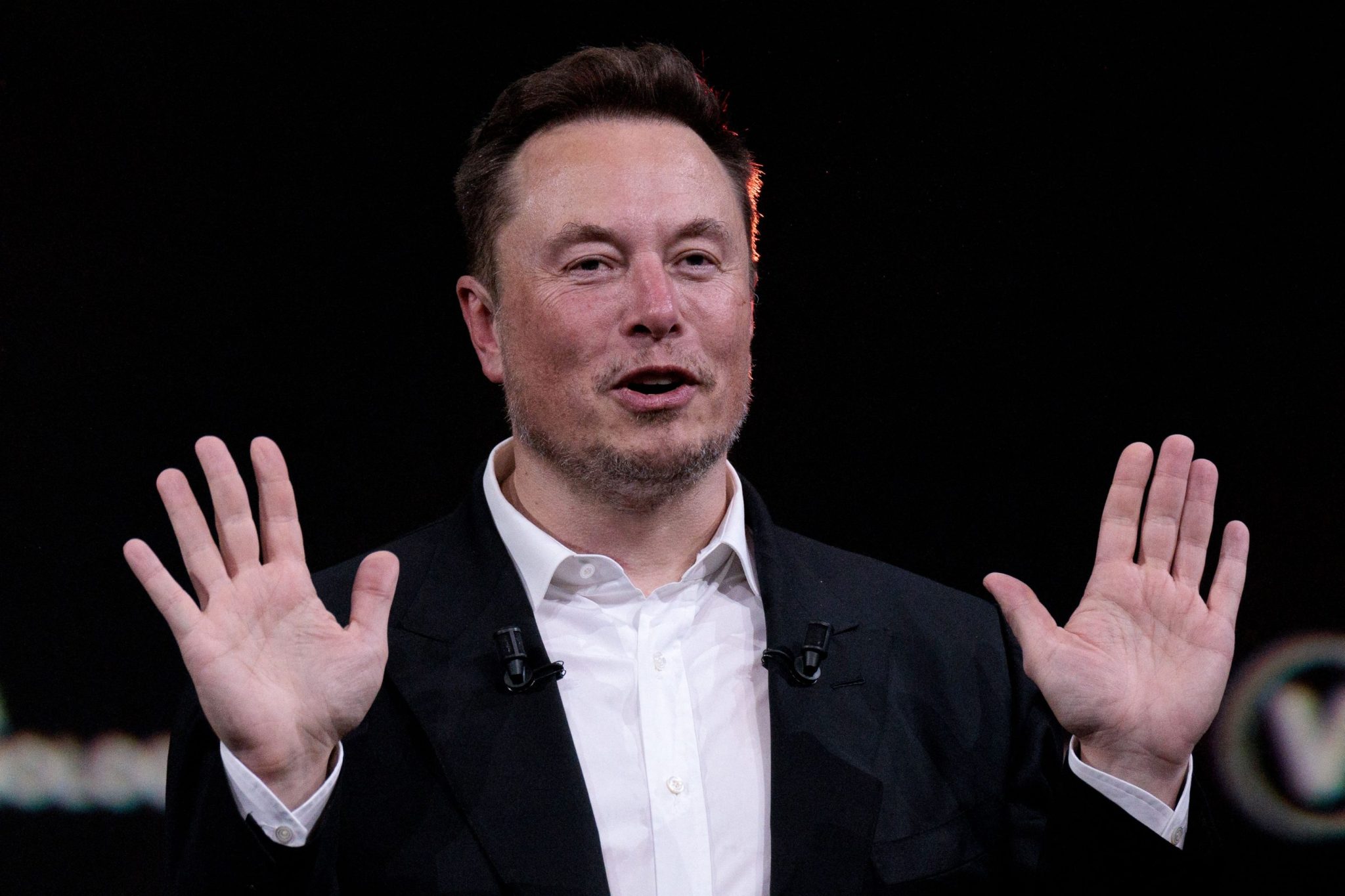
It’s official: Tesla and SpaceX are in talks. Independent board members at the two Elon Musk-led companies have formed special committees to hash over a possible merger, Musk told investors during SpaceX’s third-quarter earnings call Tuesday.
“These special committees consist of independent directors, and because I’m a conflicted party, I can’t actually be in the discussions of the special committees,” said Musk, who was asked about a potential combination during the call. “This is definitely the kind of question where I feel like I’m tap dancing through a minefield.”
Tesla stock rose just over 1% in after hours trading, while SpaceX rose above 5% following the Q&A with Wall Street analysts featuring Musk, SpaceX president and COO Gwynne Shotwell, and chief financial officer Bret Johnsen.
Musk said the committees haven’t reached any kind of an agreement on the terms of a potential transaction, and there’s no guarantee that they will. He noted that “some people out there assume that a SpaceX and Tesla merger is a certainty, and I think that would be overstating it.” Musk also has to walk a fine line as a conflicted party. As the CEO of both companies, he owns a roughly 20% stake in Tesla and 45% of SpaceX—and wields control over about 82% of the voting power at the latter.
“It’s an odd kabuki dance where two groups of people are talking and I can’t be in the conversation,” said Musk.
At the same time, Musk has made clear he believes a tie-up would be a fine idea. He cited collaboration on AI software, chip design, robotics, and connectivity, plus the planned Terafab chip plant, which is a colossal manufacturing complex being developed by SpaceX and Tesla jointly.
The committees were formed “at the request of shareholders,” said Musk and on the Tesla side it would need support from a majority of all outstanding shares, which Musk described as “quite a high hurdle.”
Tesla filed its annual shareholder proxy report on Monday, and it doesn’t include a merger proposal for shareholders to vote on. Rumors of a tie-up, however, have swirled for months, even before SpaceX’s blockbuster IPO in June.
A $3.5 trillion company
At Tuesday’s closing prices, a combined Tesla-SpaceX would have a total market value of about $3.5 trillion, with SpaceX at about $2 trillion and Tesla at nearly $1.5 trillion. A formal deal price wouldn’t come until much further down the road, if at all. Musk would own about a third of the combined entity. The companies are already financially entangled, including a $2 billion investment by Tesla in SpaceX, Tesla’s Monday proxy statement confirmed.
There are also multiple areas of overlap between the Tesla and SpaceX boards.
Ira Ehrenpreis, founder of venture capital firm DBL Partners, chairs SpaceX’s compensation and nominating committee, which is a single committee at SpaceX, as well as the two separate committees at Tesla. And Tesla board member James Murdoch, who has been a director at the electric-vehicle maker since 2017, testified in a previous legal challenge over Musk’s pay package at Tesla that he had previously invested in SpaceX.
The disclosure from Musk came as SpaceX reported its first operating profit since its June IPO.
Revenues for the third quarter fiscal 2027 year rose 161% to $14.58 billion, well above the $12.86 billion analysts expected, according to Visible Alpha consensus from S&P Global Market Intelligence. Operating revenue clocked in at $2.79 billion, apnd net income was $4.4 billion.
Revenue from SpaceX’s AI business, which was renamed “Super Intelligence,” nearly tripled from the second quarter to $7.56 billion, surpassing Starlink’s $5.25 billion for the first time since the company went public.
In his usual fashion, Musk offered up aggressively optimistic thoughts about the future of SpaceX, claiming SpaceX’s breakneck buildout pace implies annual recurring revenue of $500 billion to $1 trillion by the end of 2027. Meanwhile, Johnsen reaffirmed a target of $100 billion in annualized revenue by the end of this year.
At its third-quarter pace, SpaceX is bringing in about $58 billion a year. Hitting the $100 billion figure would take about $8.3 billion of revenue in December, roughly 70% more than its average month last quarter. Musk’s range would require about $42 billion to $83 billion a month by December 2027.
Tesla did not immediately respond to a request for comment.
#Elon #Musk #Tesla #SpaceX #weighing #trillion #mergerwithout #room