In 1912, the French physicist Conrad Schlumberger could be found kneeling on the ground of his family’s estate in Normandy, strategically placing wired electrodes in the soil. He was performing conductivity tests to detect the buried ruins of a medieval abbey destroyed there during the French Revolution. But the experiment had a broader purpose: proving that electric instruments could be used to reveal and map underground structures from the surface. Schlumberger’s approach worked, and it turned out to be a remarkably effective tool for a more lucrative enterprise: finding oil.
Conrad and his brother Marcel Schlumberger went on to create the first well logs—using electric cables for subsurface readings, producing outputs that resembled EKG heart monitor readings. The method became the backbone of modern geophysical prospecting, and supercharged the growth of a burgeoning oil and gas exploration industry worldwide. In 1926 the brothers founded the Société de Prospection Électrique (Electric Prospecting Co.). That company—eventually Schlumberger and now SLB—rapidly expanded into Venezuela, the United States, and the Soviet Union. By the end of the 1930s, Schlumberger had moved into the Middle East, more than 20 years before the formation of OPEC.
Over a century of upheaval and industrial reinvention, SLB has grown into the largest oilfield services and energy technology company in the world. Known in the industry as “Big Blue” for its signature blue uniforms, it has remained in all those key locations, and expanded to another 100 countries.
Now, as the Middle East’s oil and gas sector rebounds from the biggest energy supply shock in modern history—the monthslong closure of the Strait of Hormuz—and Venezuela rebuilds its energy infrastructure, SLB is ideally positioned to profit from this growth in its next century.
In the energy services industry, which does all the grunt work for oil producers—drilling, fracking, and, increasingly, digital and AI-driven automation services—SLB is larger than its better-known American rivals, Halliburton and Baker Hughes. With 109,000 workers worldwide, SLB employs more people than ExxonMobil and Chevron combined.
In Venezuela, SLB and Chevron—two companies that never left the country even after the Hugo Chávez regime expropriated oil assets—will work with state-owned PDVSA to reinvigorate the world’s largest proven oil reserves. In the Middle East, SLB partners with Saudi Aramco, the United Arab Emirates’ ADNOC, Kuwait Petroleum, and others.
“The thing about SLB is they don’t leave,” said James West, head of energy and power at Melius Research. “They don’t leave countries when there’s a coup or a change in government or a conflict.
“Every international market is their backyard,” West added. “So I think they’re going to be the biggest beneficiary of this recovery in oil and natural gas production.”
Thriving even amid chaos and conflict
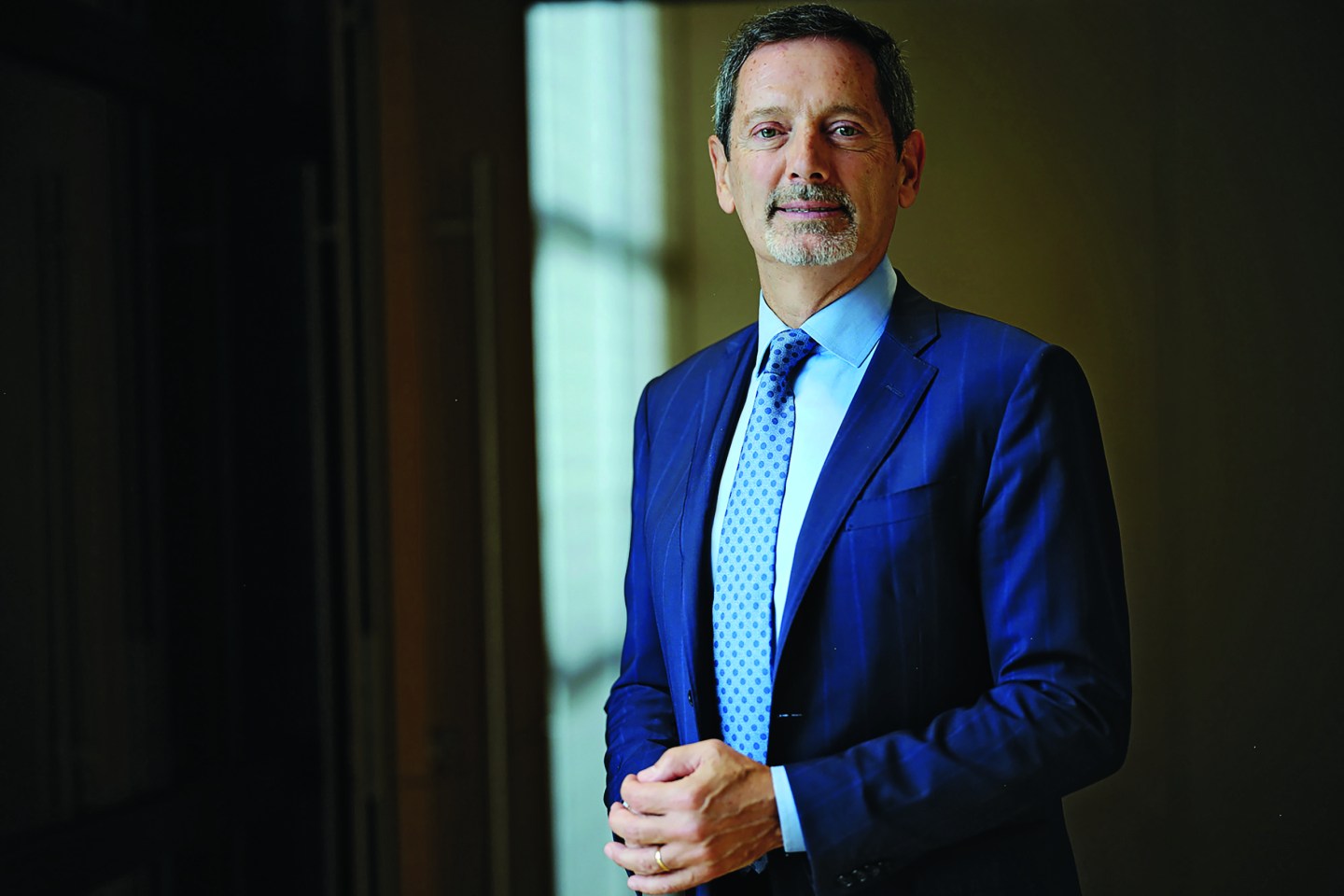
Olivier Le Peuch knows to never let an energy crisis go to waste. He is the first French CEO of SLB since 1986, a year before he joined the company as a young electrical engineer. Sitting in its Houston office—SLB is formally incorporated in Curaçao for tax purposes, but its three principal offices are in Houston, Paris, and The Hague—Le Peuch, 62, exuded calm. SLB, after all, thrives in chaos and conflict.
“We are very used to this,” Le Peuch explained in thickly accented English. “It’s part of who we are. It’s part of the routine, unfortunately, that we have learned to live with crisis management, and working in situations that are geopolitically complex.”
“Geopolitically complex” may be an understatement. The world entered 2026 on the verge of a global oil glut, before the Middle East conflict quickly changed everything, choking off nearly 20% of the world’s oil and gas supply and dramatically shrinking emergency oil reserves around the world from the U.S. to China. With ongoing uncertainty over the situation in the Strait of Hormuz, nations want to replenish their lost fossil fuel inventories, build up bigger stockpiles, and become more energy-secure through their own domestic production.
“The thing about SLB is they don’t leave…when there’s a coup or a change in government or a conflict.”
James West, Melius Research
All this may be painful for governments, companies, and consumers paying more for products and at the pump, but it promises to create a boom for oil companies and the sector that services them. “If you want to create an oil upcycle, you shut the Strait of Hormuz and you get one,” West observed.
The Iran war is accelerating a pivot toward geopolitically driven, regional energy security, Le Peuch said, including President Trump’s emphasis on oil production in the Western Hemisphere, the so-called Donroe Doctrine. Countries now want a bigger buffer of energy supply—“a bit more flexibility to respond to this crisis.”
Julie Glassberg—Redux for Fortune
“The peak of globalization is behind us,” Le Peuch said. “The geopolitics are shaping the world differently, and energy will be more diversified. It will be the strategy for many countries to ensure they have enough energy sources to supply and guarantee their growth, or to support their AI investments.”
What does this mean for the energy infrastructure sector? After years of underinvestment and worries about so-called peak oil demand, Le Peuch put it simply: “Exploration is back.”
“The end of the whip in terms of volatility”
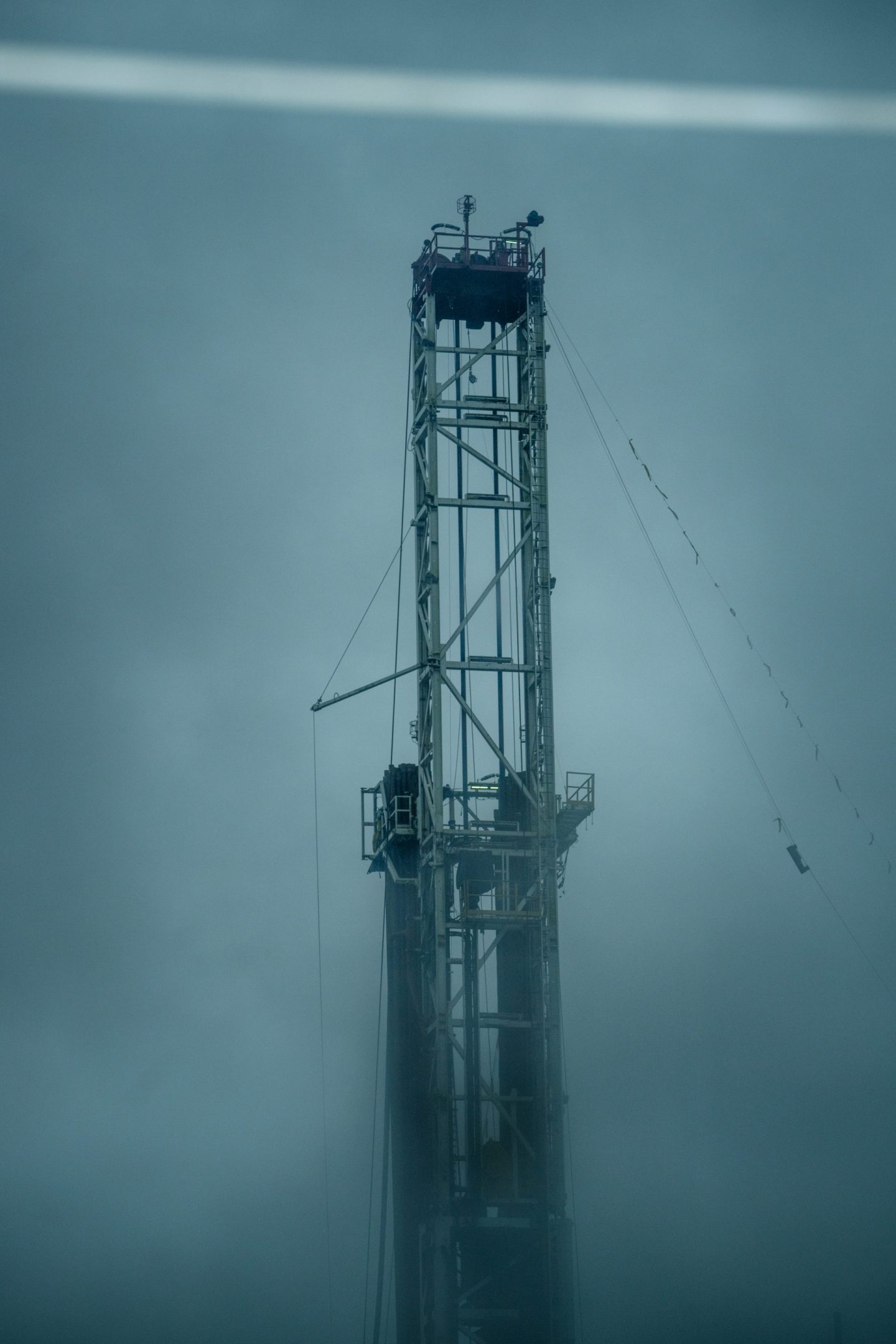
The whole enterprise of oil and gas exploration and extraction is grueling, and success is eked out only through hard, complicated labor, much of it done behind the scenes. “There’s a belief by investors and the public at large that the oil and gas companies themselves do the work, which they don’t,” West explained. “They own the assets, but it’s the service companies that do all the heavy lifting. They’re the ones that have all the people and the steel and the equipment, and actually do the work.”
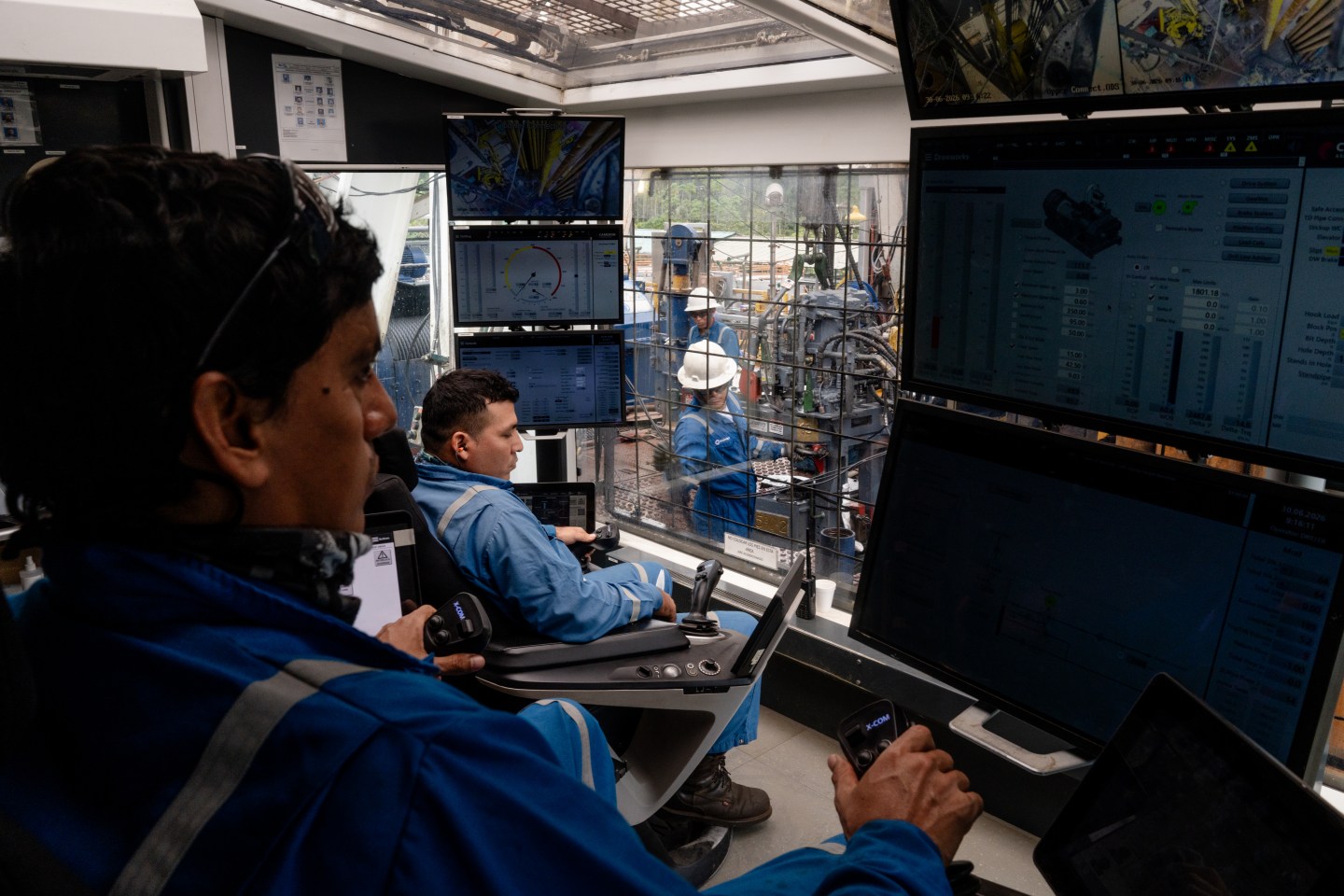
Going back decades, Schlumberger built strong footholds around the world by hiring local workforces and embracing communities long before other oil companies followed suit. “Unfortunately, oil is not found in the most friendly countries in the world; SLB perfected the art of scaling down and getting people to safe places,” West said. “Lining up the flights, getting their employees home, providing whatever emergency services are necessary.”
But SLB hasn’t benefited as much as its customers from its central role in the industry. Big Oil leader ExxonMobil had a market cap of $600 billion in mid-July—after hitting an all-time high this year—while SLB was sitting below $75 billion, down somewhat from its height during the shale oil boom of the past decade.
“They are the end of the whip in terms of volatility,” said Jim Wicklund, a veteran oil analyst and managing director at PPHB, an energy investment firm. “When things slow down—oil and gas prices go down—they go down harder than everyone else. If you own a drilling rig in a down market, that rig has the value of a boat anchor.”
In some ways, SLB and its competitors became victims of their own operational efficiencies: Exxon in the past may have paid them to drill a well for 30 days. Today, that same well can be completed in less than a week. That’s great for Exxon, Wicklund said, “but if you own that drilling rig, you just lost 80% of your revenues.”
Johanna Alarcón for Fortune
In 1980, Schlumberger had the fourth-largest market cap in the world, behind only IBM, AT&T, and Exxon. Measured by revenue, the Fortune Global 500 ranked SLB at its recent high point of No. 215, in 2015, but the company has since fallen to No. 460—courtesy of oil volatility and those efficiency gains. There’s a new optimism that it could rise back up as the global energy industry gets back to work.
Today, SLB focuses on drilling services, well construction and completion, subsurface characterization, production chemicals, and, of course, Conrad Schlumberger’s pioneering wireline services—detecting and interpreting everything going on inside a well. “They’re the 800-pound gorilla in oilfield services,” Wicklund said, “and everyone sees now how important oil has become.”
Tech at the center of the strategy
SLB’s business goes far beyond oil. The company has expanded into geothermal energy, carbon capture services, and lithium extraction. And the company’s fastest-growing segment is now its digital and data center solutions business.
Dating back to Conrad’s pioneering experiments, SLB has always been ahead of the curve in tech and automation. For decades, SLB pioneered digital technologies for subsurface data and for automating work once done by roughnecks. In 1985, the company launched the Schlumberger Information Network (SINet), the first Arpanet-based corporate intranet in the world. In 2008, it partnered with Nvidia well before most people had even heard of what is now the world’s most valuable company. AI-controlled rigs now use SLB’s “autonomous geosteering”—drilling thousands of feet underground without human involvement.
“The company transformed its ability to go from mainframe to desktop, and then from desktop to cloud, then to cloud and AI,” Le Peuch said. “And we were the first at every step.”
That digital transformation became a key reason for shortening the corporate name from Schlumberger to SLB in 2022. “It’s a very smart thing for them to do,” Wicklund said, even if “most people in the industry thought it was a huge mistake.” Schlumberger was a well-known name in oil and gas; SLB sounded like a whole new company.
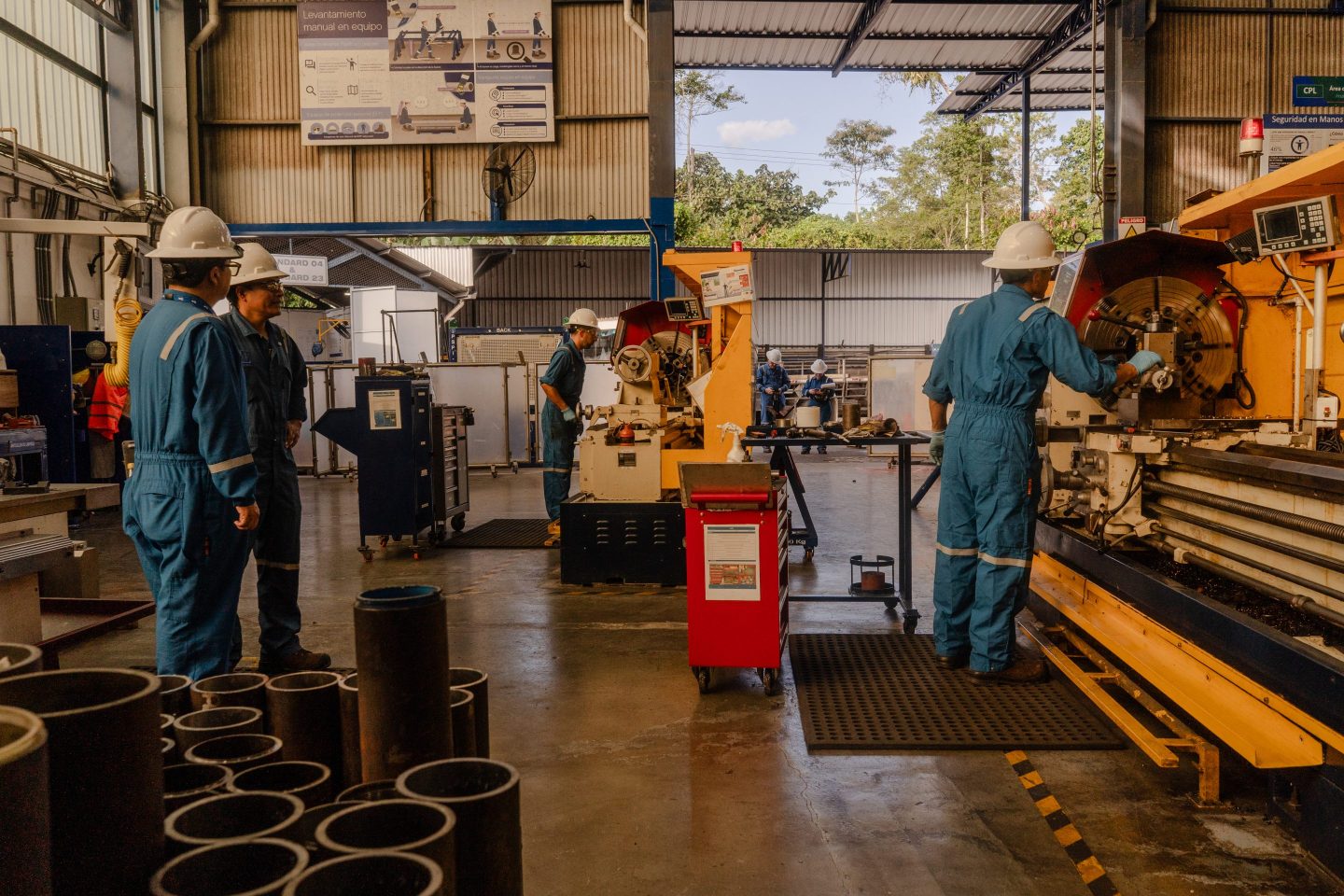
Still, SLB’s digital growth remained tied to the cyclical oil sector—until AI changed that. While most energy companies are feeding the AI boom by building power plants, SLB is focusing on digital power management and modular data center construction, helping hyperscalers use off-site manufacturing and standardized processes for everything from server racks to cooling systems to build faster and operate more affordably.
Johanna Alarcón for Fortune
Leading AI hyperscalers have told investors they plan to spend roughly $710 billion on North American data centers in 2026 alone, so it stands to reason that the energy industry would want a piece.
“All these companies jumped very hard into whatever they could do for data centers, which ended up being supplying power, but SLB is digitally optimizing not only the power, but the entire operation,” Wicklund said. “They’ve clearly taken the lead in that.”
The family, and business, spreads across the globe
SLB’s fortunes rose with the great oil boom and global transportation revolution of the 20th century. But its founding family’s artistic, globe-trotting descendants have mostly stayed out of the business—and some have visibly wrestled with what that oil money has meant.
The company’s early decades were marked by the tumult and horrors of World War II, which also contributed to the company’s international expansion. As the business grew into the global “Big Blue” giant, Conrad Schlumberger died suddenly in 1936 at 57 years old after suffering a cerebral hemorrhage.
Conrad’s daughter Dominique fled occupied France in 1941 with her three children while her husband, John de Menil, was working for Schlumberger in Romania. They sought temporary refuge in Cuba and ultimately settled in Houston. The company also managed to ship the blueprints for Schlumberger’s many inventions to Texas, for safekeeping, out of German hands.
John de Menil led the company’s Latin American growth beyond Venezuela to Ecuador and other countries, and later its push into East Asia.
Johanna Alarcón for Fortune
Conrad’s brother Marcel remained in German-occupied France while the operational headquarters moved to Houston. A later CEO, Jean Riboud, served in the French Resistance; he was captured and held in a concentration camp. After the war he met Marcel and went on to lead the company for 20 years, until 1985.
François de Menil, now 81, was the first of his immediate family born in the U.S.—in 1945 in Houston to Dominique and John. “My father liked the can-do spirit of Texas, and the wildcatter-type mentality,” de Menil recalled in an interview with Fortune. “I think he was very taken with that.”
Every summer, the de Menils would trek to France and spend time with the larger Schlumberger family at the Val-Richer estate in Normandy—the same land where Conrad conducted his early experiments.
François never seriously considered joining the family business—and in his branch doing so was actively discouraged. “My father very strongly advocated against that,” he says. “The company needed professionals, not family members. That is likely part of the reason for the success.”
François remains torn about his family’s legacy—and as an architect his work focuses on energy conservation. “It’s quite a remarkable story because [Conrad’s] invention revolutionized the methods by which they prospect for oil,” he said. “Regretfully, what we’ve discovered is that fossil fuels are undoing our world.
“The benefits worldwide to people through energy and oil are apparent,” he remarked, “but it has a price.”
From Conrad to Riboud to Le Peuch today, the company’s executives have always described Schlumberger as a technology firm first, ever since it embraced electrical geophysics at the turn of the century.
“It just happened that the first data we collected, the first data we interpreted, were on an oil well,” Riboud said in 1981.
And even amid today’s oil boom, Le Peuch said, innovations in clean energy and reducing the carbon footprint of oil and gas remain part of the company’s mission.
“I think the industry is at the age of transformation,” Le Peuch noted. “The customer trusts us to innovate in the most remote, the most complex environments, as well as whenever there is an opportunity to disrupt through a new technology.”
Oilfield heirs
A petro-fortune fueling art and film
As their company expanded, so did the wealth of the Schlumberger family and the prominence of its branches—the de Menil and Seydoux families.
The Seydoux family dominates the European film industry. Onetime Schlumberger president Jérôme Seydoux—Marcel’s grandson—controls film and theater giant Pathé. His brother Nicolas chairs the Gaumont film studio. Jérôme’s granddaughter, the movie star Léa Seydoux, broke through internationally in the French film Blue Is the Warmest Color. She went on to star as a “Bond girl” in 2015’s Spectre.
In Houston, where Conrad’s daughter Dominique fled from Nazi-occupied France in 1941 with her husband, John de Menil, and their three children, the family has been prominent in the arts community as the city expanded from oil boomtown to major metropolis. They developed the Menil Collection—the most prominent private museum in Houston. The family has been described by the New York Times as “the Medici of modern art,” citing the famed Italian art patrons of the Renaissance.
“They did something remarkable because they believed in it,” said François de Menil of his parents. “John and Dominique had an influence on the family as a whole with respect to art.”
This article appears in the August/September issue of Fortune with the headline “The quiet giant of big oil.”
#Meet #SLB #billion #oil #services #giant #poised #cash #data #centers #postStrait #Hormuz #oil #exploration #boom