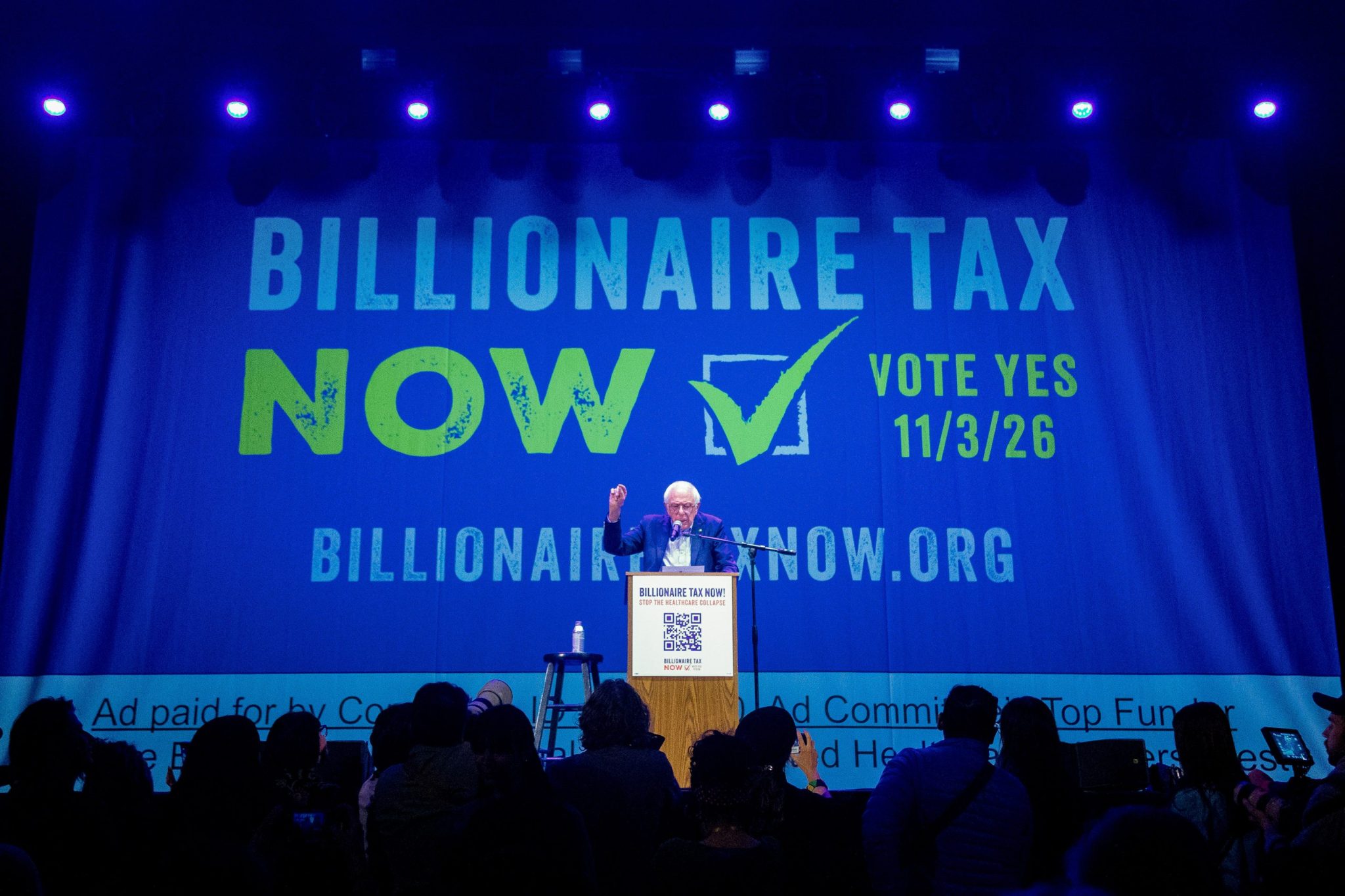
News of billionaires fleeing California over the proposed billionaire tax have dominated the headlines: the one-time tax of 5% on the wealth of California’s (perhaps dwindling) 250 billionaires. But what about those who chose to become academics, and as a result, may not have achieved billionaire status? It turns out most academics who study taxes for a living would vote against California’s proposed billionaire tax, a new survey finds.
Jeff Hoopes, a professor at the University of North Carolina and research director of the UNC Tax Center, surveyed members of the National Tax Association, a professional group of mostly academic economists, accountants, and lawyers. Of the 105 respondents, 73 (69.5%) said they would vote against Proposition 40, and 32 (30.5%) said they would vote for it.
Accountants were the most opposed, with 17 of 20 (85%) against the tax. Among economists, 49 of 69 (71%) opposed the tax. Meanwhile, among lawyers, nine of 15 (60%) favored the measure. Law professors also wrote much of the new measure: Three of its principal drafters, Brian Galle, David Gamage, and Darien Shanske, are tax-law professors. Overall, that comes out to seven out of 10 tax scholars who would think otherwise before voting on Prop 40—but it’s not because they oppose the idea behind it.
“The 70% of folks who would not vote for Prop 40 seems to have two different camps,” Hoopes told Fortune. “Those who would favor wealth taxes in general, but just thought this particular version was bad, and those who don’t think a wealth tax is a good idea at all.”
Doesn’t go far enough
Some respondents explained their votes in written comments, and for those in Hoopes’ first camp, respondents said they would back a federal wealth tax but doubted a single state could enforce one when billionaires and their assets can move. Others questioned whether a “one-time” tax would stay that way, or said valuing private companies would bring costly disputes. Supporters in the sample cited the efficiency of a surprise tax on wealth already built up, the case for reducing concentrated wealth, and the revenue it would raise.
For Hoopes, the main concern is people moving from the state: “I think there is a real chance that we see some billionaires change where they claim residency based on this tax.”
In Norway, he said, the very richest moved in response to its wealth tax: “It would not take very many of the very richest ones moving to make a large dent in the expected tax revenue.”
He also cited Elon Musk, who moved from California to Texas and referenced that taxes were part of the reason. “It’s not crazy to think this might push other like-minded billionaires over the edge,” Hoopes said, noting that California already has the highest top income tax rate in the country.
“In a state that is near the very top in both spending and taxes per capita, it’s clear California has a spending problem,” he continued. “If I had a friend who made $600,000 a year but had $700,000 in expenses, I would not tell him to get some side-hustle to bring in extra money. I would say figure out how to live on the extraordinary income he already has.”
The tax has the potential to raise as much revenue as a 5% income tax on all Californian taxpayers, and even raise about $100 billion to backfill federal Medicaid cuts. But some papers throw water on those estimates: A Hoover Institution working paper estimates the state could lose more in future income tax revenue than the wealth tax brings in. The drafters’ estimate supports the $100 billion figure.
Hoopes said he ran the survey after six Nobel Prize–winning economists, including Paul Krugman and Joseph Stiglitz, endorsed the measure in September. “I was baffled, because even the left-leaning economists I know were against it,” he said. “It turns out the economists I know personally are much more like the 105 people who responded to my survey than the six people who won a Nobel Prize.”
The survey has limits. Hoopes used a 2024 membership directory, and the NTA did not sponsor or approve the poll. Hoopes sits on the advisory council of the right-leaning Tax Foundation. Voters, meanwhile, are more evenly split. A September Public Policy Institute of California poll found 52% of likely voters back Prop. 40, but majorities also backed Props. 41 and 42, two measures funded largely by Google cofounder Sergey Brin, that would effectively cancel the tax.
#tax #scholars #vote #Californias #billionaire #tax #survey #finds