Federal Reserve Board Chairman Kevin Warsh holds a news conference following a Federal Open Market Committee meeting.
This story will be updated with further details from the Fed’s October 2026 interest rate decision.
The Federal Reserve on Wednesday held its benchmark interest rate steady amid elevated inflation as policymakers opted to wait for additional economic data after hiking rates in September.
Fed policymakers voted 10-2 to leave the federal funds rate at its target range of 3.75% to 4%. The move follows a 25-basis-point rate hike in September, which was the central bank’s first interest rate increase since July 2023.
The Federal Open Market Committee (FOMC), the central bank’s panel responsible for monetary policy moves, noted that economic activity “is expanding at a strong pace” despite uncertainty that is in part due to geopolitical developments, with strong productivity growth and capital investment, while job growth has “kept pace with the workforce, and the unemployment rate has changed little.”
The FOMC statement added that inflation remains elevated and that the “accumulation of more information will help the Committee determine the policy stance appropriate to ensure a timely return of inflation to the Committee’s 2% goal. The Committee will deliver price stability.”
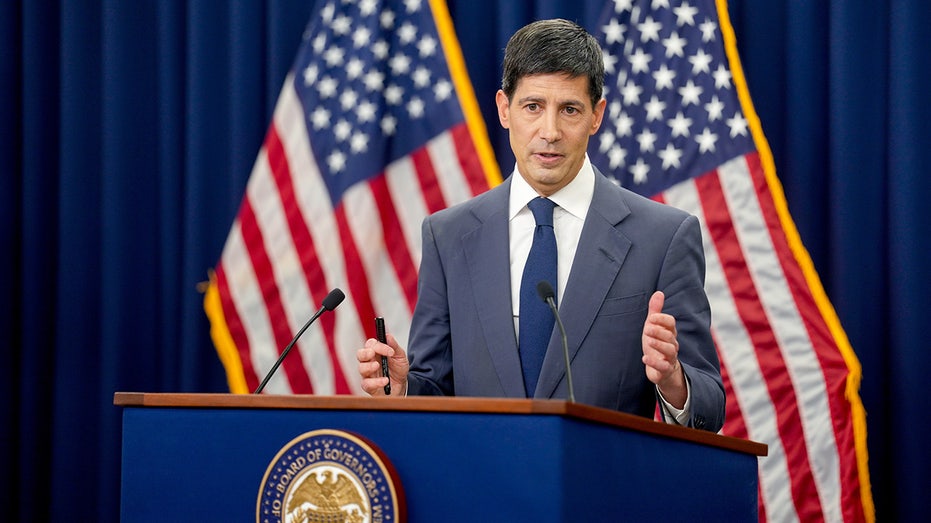
Federal Reserve Chair Kevin Warsh will hold a press conference to discuss the Fed’s interest rate decision. (Al Drago/Bloomberg via Getty Images)
There were two dissenters from the FOMC decision to leave interest rates unchanged – Cleveland Fed President Beth Hammack and Fed Governor Lisa Cook each voted in favor of hiking interest rates by 25 basis points.
Federal Reserve Chair Kevin Warsh said that policymakers go through a process of “interrogating reality” as they assess economic conditions at each FOMC meeting, adding that the process has been complicated by high levels of investment, a steady labor market and elevated inflation.
Warsh noted that the labor market conditions are “quite positive” on that side of the Fed’s dual mandate, which is to promote full employment, but added that on the price stability side of the mandate “Americans, of course, are still dealing with inflation that has been running above the committee’s objective for close to six years. It’s our responsibility to get inflation down.”
He explained that since the Fed hiked rates by 25 basis points in September, policymakers have seen that financial and credit conditions have tightened for some businesses and households “much as we would expect.”
Warsh added that market participants are “becoming somewhat more discerning in their capital allocations. And while overall financial conditions are tighter, I’m unwilling and unable to call them tight. But broadly, these developments go in the direction of achieving a longer, more durable period of economic growth and price stability.”
#October #FOMC #Federal #Reserves #holds #rates #steady #ahead #election