In an interview with Fox News Digital, Douglas Hoey of the National Community Pharmacists Association said splitting CVS Pharmacy from its insurance and Pharmacy Benefits Manager businesses could improve competition and lower costs.
CVS Health on Tuesday announced plans to split its sprawling conglomerate into separate health insurance and pharmacy businesses, a move one industry expert welcomed as a potential way to drive down costs for millions of Americans.
The separation is expected to be completed by the first half of 2028, creating two independent, publicly traded companies.
The healthcare solutions company, which will temporarily retain the CVS Health name, will include its pharmacy benefit manager (PBM) insurance plans and subsidiaries, including Aetna, CVS Caremark, CVS Specialty, Oak Street Health and Signify Health.
CVS Pharmacy, the company’s retail division, will include roughly 9,000 stores, its mail-order pharmacy business, MinuteClinic and the Health100 technology services unit.
CVS PHARMACY REACHES $315M SETTLEMENT WITH JUSTICE DEPARTMENT OVER CONTROLLED SUBSTANCE PRESCRIPTIONS

CVS Pharmacy, the company’s retail division, will include roughly 9,000 stores. (Joe Raedle/Getty Images, File / Getty Images)
Existing CVS Health investors will receive shares in both companies tax-free, according to the Woonsocket, Rhode Island-based company.
The announcement rattled investors, sending CVS shares plunging nearly 13% Tuesday to levels not seen since spring.
For independent pharmacies, however, the breakup could create a more level playing field against the retail pharmacy giant.
| Ticker | Security | Last | Change | Change % |
|---|---|---|---|---|
| CVS | CVS HEALTH CORP. | 79.96 | -11.45 | -12.53% |
An industry expert representing thousands of independent pharmacies told FOX Business that the move could restore market competition, improve patient access to medications and potentially lower prescription drug costs if “CVS becomes a true partner with other pharmacies.”
“We think it will be good for competition, good for patients, lower prices, good for small businesses to be able to compete against these conglomerates,” Douglas Hoey of the National Community Pharmacists Association (NCPA) said.
CVS OFFERS NEW PHARMACY OPTION FOR PET OWNERS
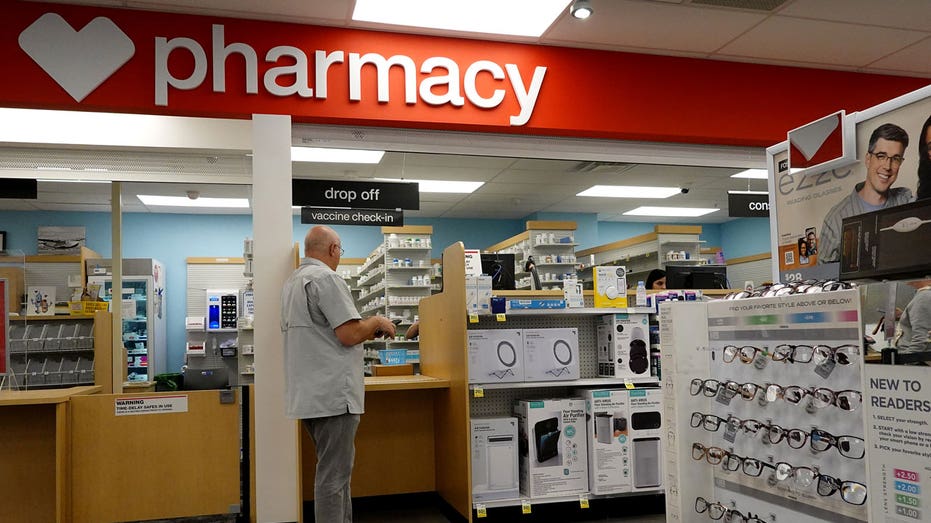
A customer stands at the drop-off counter inside a CVS Pharmacy store. (Joe Raedle/Getty Images, File / Getty Images)
As a standalone entity, the CVS retail pharmacy business could see more store closures, Hoey added, pointing to the company’s track record of shuttering roughly 10% of its locations over the past five years due to underperformance.
“With the company split off to be a CVS Pharmacy, my guess would be that they’re going to look even more closely at underperforming stores and want to close underperforming stores,” Hoey said. “The good news for patients is that most of the time.
“CVS’s are located near other pharmacies. … And so when one closes, there’s usually another option, whether it’s an independent or another chain that patients can choose from.”
Hoey added that the separation could help level the playing field in the pharmacy market, arguing that CVS’s competitive practices have contributed to the closure of independent pharmacies. Today, he said, only about one-third of pharmacies nationwide are independently owned.
FTC TO INVESTIGATE CVS CAREMARK, HUMANA, OTHER PHARMACY BENEFIT MANAGERS

A CVS MinuteClinic patient exam room in South Portland, Me. (Gabe Souza/Portland Press Herald via Getty Images, File / Getty Images)
“Independent pharmacies have gone out of business. Rite Aid has declared bankruptcy. Walgreens is no longer a publicly traded company. They were taken off the stock market because they were purchased by private equity,” Hoey said.
“CVS is not only a competitor, but they decide how much their competition gets paid. They can also decide where patients can go to get their medicine,” Hoey said.
Splitting the company would mean that CVS would not be deciding “who’s the judge, the jury and the executioner for all the other pharmacies?” Hoey said.
CVS may have pursued the separation for two primary reasons, Hoey said.
The move could unlock shareholder value by separating its slower-growing, lower-margin retail drugstore business from its faster-growing, more profitable healthcare divisions.
In a statement released Tuesday, CVS said the restructuring would allow the company to “evolve into two companies with greater focus and more value for stakeholders.”
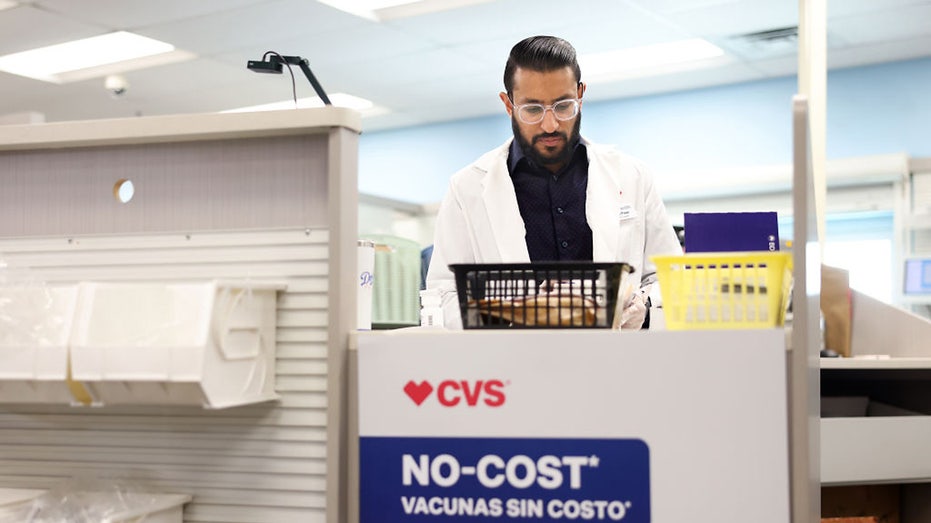
A CVS pharmacist prepares vaccinations at a store in Huntington Park, Calif. (Christina House / Los Angeles Times via Getty Images, File / Getty Images)
Hoey added that the split could also help the company get ahead of mounting regulatory scrutiny over vertical integration, which allows companies to steer patients, dictate drug coverage, and underpay competing pharmacies.
In 2025 and 2026, Arkansas and Tennessee, for example, passed laws barring PBMs from owning retail pharmacies, citing potential conflicts of interest. Both measures, however, are facing ongoing federal legal challenges.
“CVS decides how much other pharmacies get paid. They also decide where patients can go to get their prescriptions,” Hoey said.
“In some instances, they pay themselves more than they pay other pharmacies.”
However, in its legal challenge to Tennessee’s law, CVS argued that PBMs operating in the state already comply with existing requirements that they “reimburse nonaffiliated pharmacies at the same or higher rate than affiliated pharmacies, and it prohibits PBMs from steering patients to affiliated pharmacies rather than nonaffiliated pharmacies.”

As a standalone entity, the CVS retail pharmacy business could see more store closures, Hoey says. ( Paul Weaver/SOPA Images/LightRocket via Getty Images, File / Getty Images)
The NCPA added that while the split is a positive development, investors will continue to hold stocks in both companies, potentially giving shareholders an incentive to see the two businesses favor one another.
“We need more information as to how they’re going to be regulated,” Hoey said.
Additionally, CVS Specialty will remain under the company’s healthcare solutions division rather than its pharmacy business.
Hoey said that means its highly lucrative specialty mail-order operations, which handle high-cost medications for cancer, multiple sclerosis and rheumatoid arthritis, as well as GLP-1 drugs like Ozempic, will remain part of the PBM and insurance business.
CLICK HERE TO GET FOX BUSINESS ON THE GO
As a result, potential conflicts of interest involving patient steering and drug rebate arrangements could remain a concern in the specialty medication market.
“They should behave like a regular pharmacy, but we’ll see how that goes. We need more information as to how they’re going to be regulated,” Hoey said.
CVS did not immediately respond to FOX Business’ request for comment.
#CVS #split #separate #pharmacy #health #care #companies #expert #weighs