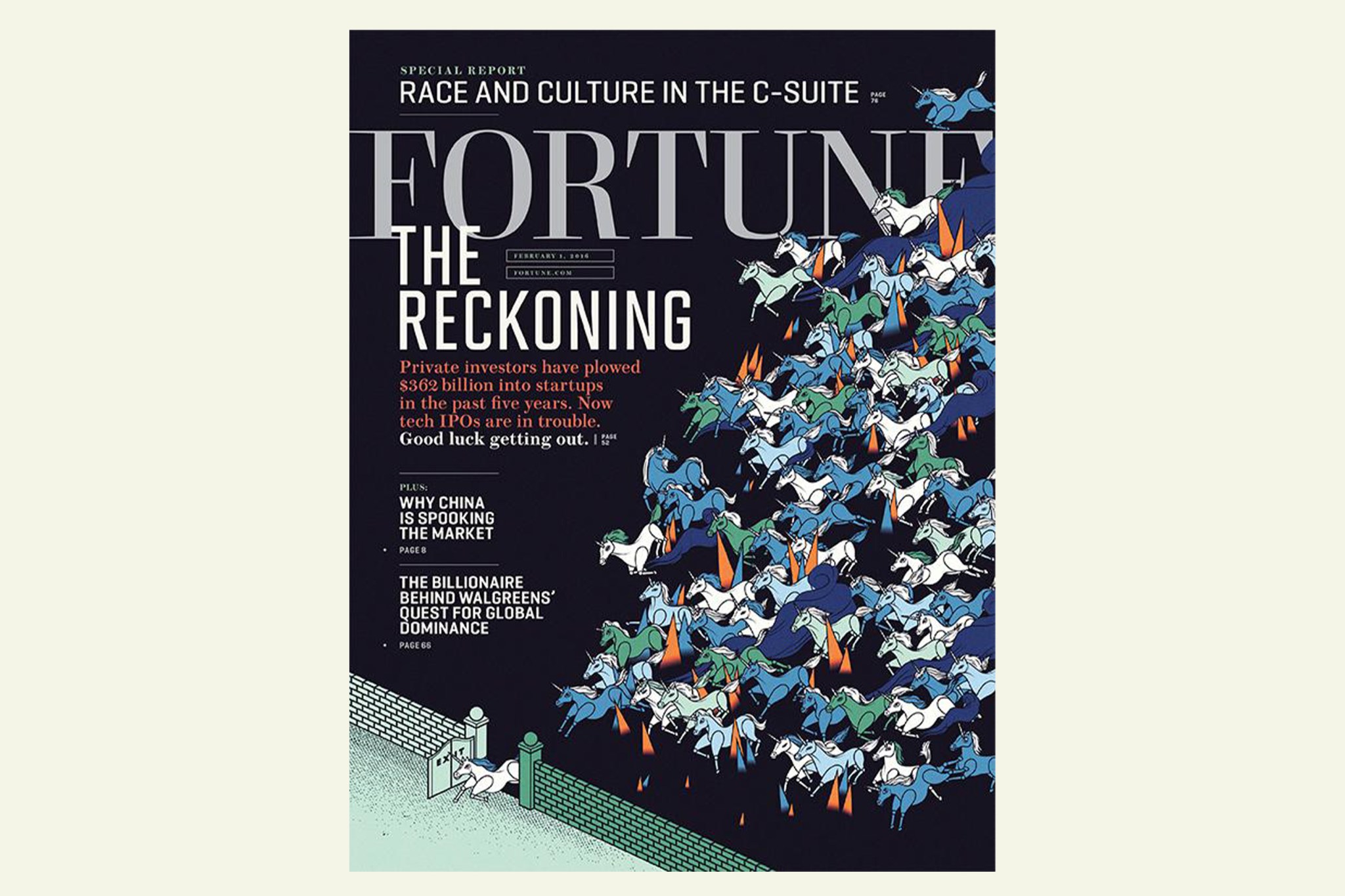
Illustrated by Liverpool-based designer Stephen Chan, the Feb. 1, 2016, cover of Fortune warned of a fast-approaching reckoning for the tech sector’s billion-dollar unicorn IPOs. The illustration depicts a stampede of unicorns racing for the exit, while the cover line warns of a broken IPO market. Among the cautionary tales in the feature are Lending Club, whose IPO was 20-times oversubscribed but saw its price fall by 50% from its high within the first year of trading, and GoPro, which reached its peak of $94 per share shortly after listing—it now trades at $0.68. This year has been billed as the year of the trillion-dollar IPO. SpaceX was the first to go public in June, with OpenAI and Anthropic also targeting lofty debuts.
Many retail investors were clamoring for a slice of Elon Musk’s aerospace business, and the fervor surrounding the IPO helped push SpaceX’s share price to a peak of $176 in its first day of trading, cementing its status as the largest IPO in history. Since then, however, SpaceX’s share price has been in steady decline, wiping $1 trillion from its highs. Savvy investors will be best advised to follow Amanda Gerut’s playbook and follow the revenue, read the prospectus, and stay patient. A decade after Fortune warned that investors and ambitious CEOs were overhyping tech companies, the markets are once again showing that, while hype can fuel a record-breaking IPO, it can’t sustain a billion- (or trillion-) dollar valuation.
This article appears in the August/September 2026 issue of Fortune.
#IPO #hype #cycle #returns