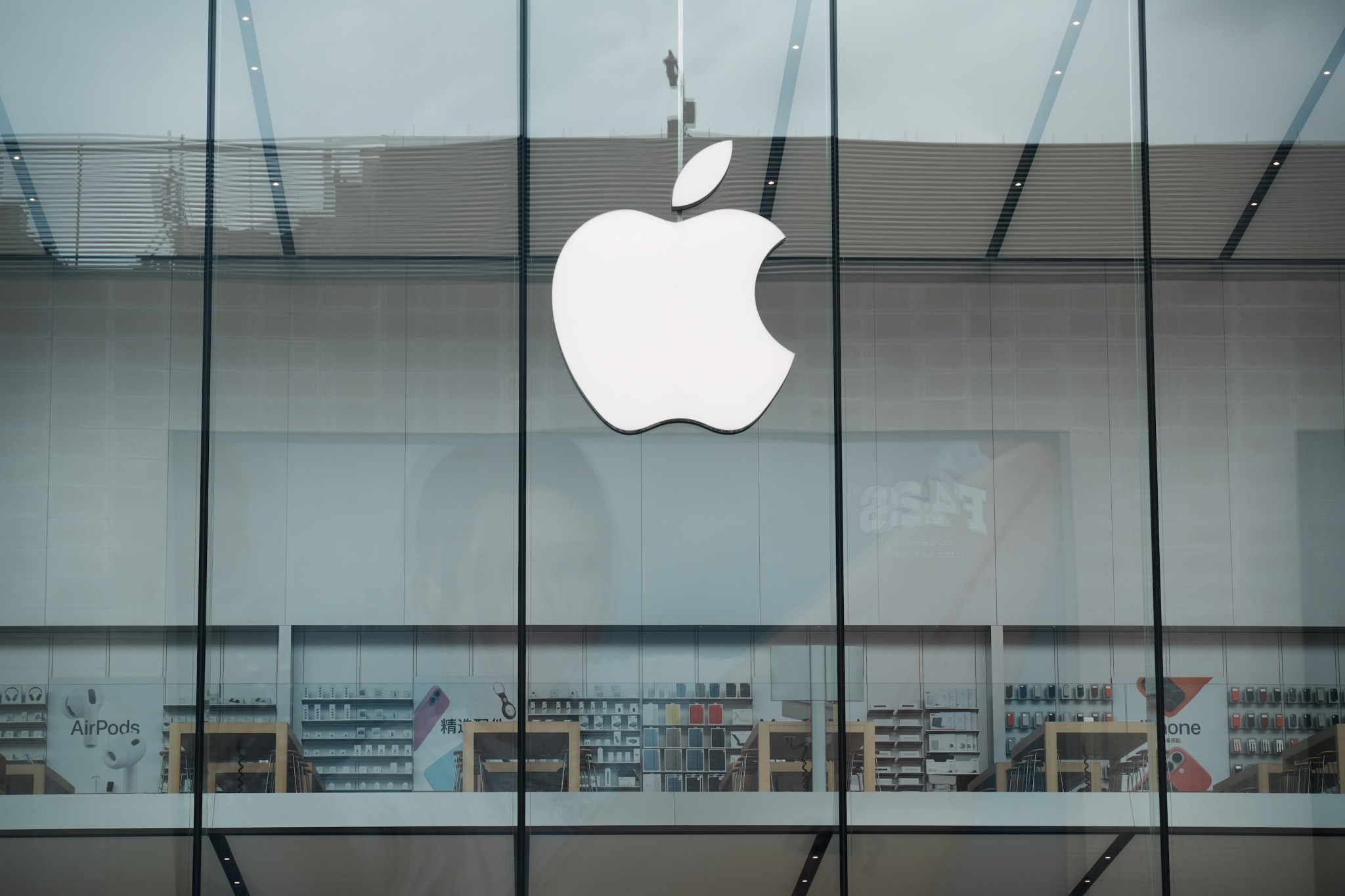
Good morning. Apple briefly crossed $5 trillion in market value this week—and how it got there should matter to finance professionals.
Fortune’s Shawn Tully reports that Apple briefly reached the milestone on Tuesday, becoming only the second company in history to hit the $5 trillion mark, less than a year after first surpassing $4 trillion. Its shares are up nearly 60% over the past 12 months, driven by a combination of strong iPhone demand, continued services growth, and a market that’s increasingly rewarding durable cash flows over capital-intensive AI investments.
Tully examines what this milestone says about how investors are repricing mega-cap tech and why Apple’s cash-generation engine and massive buyback program continue to command a premium. His analysis also explores the growing concentration risk as market indices become even more heavily weighted toward a handful of giants, the durability of Apple’s margin profile, and how buybacks at this scale influence long-term valuation. Read Tully’s full analysis for his assessment of whether Apple can reclaim—and sustain—a $5 trillion valuation.
On Thursday, Apple reported fiscal Q3 2026 revenue of $109.4 billion, up 16% year-over-year, a June quarter revenue record, and EPS of $2.02, up 29% year-over-year and beating Wall Street estimates. “We saw strong performance around the world with double-digit growth in every geographic segment despite supply constraints,” CFO Kevan Parekh said on the earnings call.
The company said it is facing severe supply constraints that will affect sales of iPhones and Macs in the months ahead. Shares dropped roughly 7% in after-hours trading following the earnings results, before regaining some ground, with the stock later trading down roughly 6% from its closing price of $333.85, Fortune reported.
Although Apple has been slower than its peers to roll out AI and has struggled to develop competitive in-house models, investors have increasingly viewed that as a strategic advantage. Unlike Meta, Google, Microsoft, and Amazon, Apple has largely avoided the AI infrastructure spending race that has driven a surge in capital expenditures.
Instead, some investors see Apple as being well-positioned to monetize AI adoption through its devices, software, and services ecosystem without bearing the same infrastructure costs. “As we move forward, we’re going to be looking for companies that monetize the consumption of AI, and Apple absolutely wants to be that company,” Joe Tigay, portfolio manager at Rational Equity Armor Fund, said in an email to CFO Daily.
It was also Tim Cook’s final earnings call as CEO. Incoming chief executive John Ternus will take the helm on Sept. 1, with Cook moving into the role of executive chairman. “We have a bright future ahead, and I truly have never been more optimistic,” Cook said.
Have a good weekend.
Sheryl Estrada
Sheryl.Estrada@fortune.com
Leaderboard
Notable moves this week:
Birgit Kretschmer was appointed CFO of Adidas. She will join the company’s executive board on Sept. 1 and officially assume the CFO role at the end of 2026. Kretschmer will succeed Harm Ohlmeyer, who decided not to extend his current term. Ohlmeyer has been with Adidas for nearly 30 years and has served as CFO since May 2017. Kretschmer brings more than 30 years of experience. She returns to Adidas, where she spent 25 years in various leadership roles across the organization, including CFO of Adidas International BV, CFO of Western Europe, and SVP of corporate and operations finance. For the past six years, Kretschmer has served as CFO of C&A, one of Europe’s fashion retailers.
Carmen Chan was appointed CFO of ZipRecruiter (NYSE: ZIP), an online employment marketplace, effective Aug. 17. Chan joins ZipRecruiter from Barclays, where she served as managing director, advising technology and internet companies. Before that, Chan spent several years at Noom, a digital health company, as VP of corporate development and investor relations. Prior to Noom, she spent more than five years at Goldman Sachs where she held investment banking roles. She also previously served as head of revenue and business development at theSkimm, a digital media company.
Ryan Moore was appointed CFO of Whataburger, effective July 31. Moore succeeds Janelle Sykes, who will retire in September after more than six years with Whataburger. Moore’s 16 years of restaurant finance leadership include six years as CFO of Torchy’s Tacos and 10 years at Taco Bell, where he served as VP of finance.
Naseem Anzari was appointed CFO of Embark, a financial, technology and business consulting firm. Most recently, Anzari served as CFO at Lido Advisors. Before Lido, he was a CFO at Sound United, a consultant at Accordion, spent time in Portfolio Operations at Terra Firma and Phoenix Equity Partners and began his career at KPMG.
Jacinto J. Hernandez was named CFO of Cadiz, Inc. (Nasdaq: CDZI, CDZIP), a water solutions and natural resources company, effective Sept. 1. Hernandez succeeds Stanley E. Speer, who will retire after 17 years with the company and continue in an advisory role through Dec. 31. Hernandez is the founder and principal of Cummings Consulting & Management. Previously, he spent 22 years with Capital Group and its subsidiary, Capital World Investors, where he served as a partner and investment analyst.
Alpana Wegner was appointed CFO of Waystar (Nasdaq: WAY), a health care payment software provider, effective Aug. 1. Wegner succeeds Steve Oreskovich, who has served as Waystar’s CFO for the past eight years and will be transitioning from the role for personal reasons. He will remain as an advisor through June 15, 2027. Wegner brings more than 25 years of finance and operational leadership experience. Most recently, she served as CFO of Integral Ad Science. Previously, she served as CFO of Secureworks and Benefitfocus.
Ashwath Bhat was appointed CFO of Capitolis, a financial technology company, effective Aug. 3. He will succeed Lindsey Baptiste Fiedler, who will remain with Capitolis in an advisory role for a transition period. Bhat brings more than two decades of financial leadership experience. He most recently served as CFO at Fractal, leading the company’s IPO in February. Before that, Bhat spent more than a decade in senior finance leadership roles at Nielsen, including CFO of global media, product and technology, and CFO of Gracenote and the Nielsen Portfolio, as well as regional CFO for Africa and the Middle East.
Big Deal
Despite this scale-up, CFOs are grappling with governance tensions: 59% cite balancing the pressure to deploy AI quickly against managing risk as their top governance challenge, while 51% point to a lack of governance authority and 43% cite insufficient visibility into how AI tools are actually being used.
Internally, cost transparency is the biggest worry, while externally, CFOs are most concerned about litigation tied to the use of protected or private content and cybersecurity. Notably, CFOs themselves are emerging as key players in AI governance—19% say they hold the greatest responsibility for it, ranking ahead of CEOs, boards, and chief risk officers, though CISOs and CIOs remain the top-cited owners overall.
Going deeper
Here are four Fortune weekend reads:
“Dow’s new CEO is ‘blessed to be stressed’—and steering a turnaround amid oil market upheaval” —Jordan Blum
“Ferrari’s Jony Ive-designed model was mocked by the internet, but it’s selling like hotcakes” —Marco Quiroz-Gutierrez
“Microsoft’s stock has biggest one-day gain since 2008, adding $480 billion in market value as cloud business booms” —Amanda Gerut
“Can a global car company survive today’s complicated world? Nissan hopes to find out” —Andrew Staples
Overheard
“Getting to age 50, having built something real, means you can be selective. You stop doing things out of fear and start doing them because you genuinely want to.”
—Victoria Beckham, founder of Nails.Inc, told Fortune. Beckham sold the company at the end of 2024 to the American private equity group Pacific World Corporation in a reported $40 million deal.
#Apple #shows #winners #dont #build #biggest #models