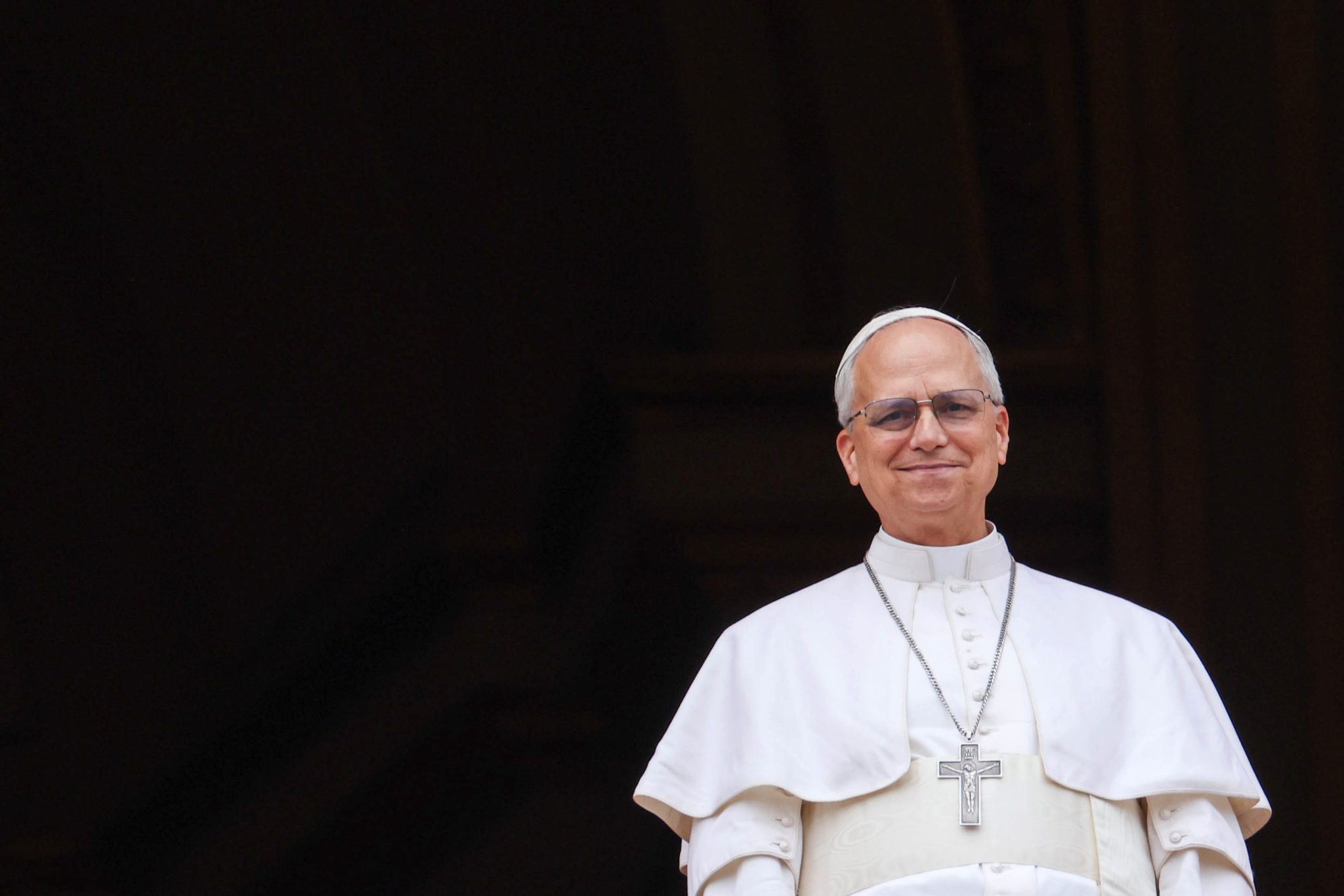
Pope Leo XIV warned that artificial intelligence risks becoming a new form of “economic colonialism,” deepening the gap between wealthy and poor nations, and said algorithms are already creating “a subtle form of domination” over who gets seen and heard.
“We must remain vigilant in this regard,” Leo told the network of officeholders who make up the International Catholic Legislators Network (ICLN) on Friday. “Lest innovation become another vehicle for ideological or economic colonialism.” He warned that AI’s rapid development risks leaving poorer countries increasingly dependent on wealthier ones for the technology.
He went further, describing what he called “a subtle form of domination when algorithms decide who is seen, and who remains invisible, when digital platforms shape public discourse without accountability, and when the dignity of workers is subordinated to the optimization of systems.” Such developments, he said, “reveal a new face of the ancient temptation to domination and mastery without service.”
To guard against that, Leo called for “robust legal frameworks, independent oversight, informed users and a political system that does not abdicate its responsibility,” so that “no single ideology or interest dictates the values embedded in artificial intelligence systems.” The pope’s words to call for a responsible political system echoes language he has used before in tension with the Trump administration’s deregulatory approach to AI. President Donald Trump has pushed to loosen federal AI rules and repealed the Biden administration’s AI executive order in January 2025. When Leo released “Magnifica Humanitas” in May, dubbed the pope’s “AI encyclical,” the Trump administration was split in response when Vice President JD Vance praised it and others dismissed the warning.
Since that time, the pope said AI and technology at large decreases the interactions and relationships people have with one another. This in turn is causing marriage and birth rates to decrease as the ages people reach these milestones increase, if at all. AI, the pope warned, “must never be allowed to erode” the family, and it does so by “reducing persons and relationships to data and simulations,” by “flooding young minds with content that distorts desire,” and through “economic models that make family life economically precarious.”
A redelivery of the church’s stance
The address built on his first encyclical, which made AI’s effect on human dignity, labor and family life the centerpiece of his papacy’s early teaching. Christopher Hale, a political consultant and founder of the newsletter Letters from Leo, said Friday’s remarks were less a new position than a redelivery of ideas already laid out in the encyclical.
“No one reads a 200-page encyclical,” Hale told Fortune. “Oftentimes what will happen is over weeks and months the pope will reveal different parts of that encyclical.” The pope’s Friday’s remarks were in gist a reiteration of his first encyclical—but the point is who it is redelivering the point.
Hale said Leo’s religious authority gives him standing that other AI critics lack in confronting the technology industry.
“Silicon Valley has an opponent that operates on a terrain that they’re not used to,” Hale said. “They’re used to dealing in transactional relationships, but Leo XIV represents something of a quagmire for them because he cannot be bought off, he cannot be terrorized, he can’t be indicted, he can’t be deported.”
Hale added that pairing AI criticism with religious language broadens its reach beyond activists already skeptical of the technology.
“When this language is combined with moral language, with religious language, what it does is it takes a leftist critique that might have marginal support in the United States and makes it mainstream,” he said.
Hale pointed to the backlash against AI data centers as evidence that opposition to the industry already cuts across party lines, even without a shared political language to unite it.
“If you look at the criticism of AI data centers, particularly over the summer, they’re really coming from all factions, from the left and the right,” Hale said. “What’s been hard about it, though, is that there has yet to be a language that can combine the two.”
“He strangely represents the fusion of the populist left and the populist right,” Hale said. “That’s what makes him so powerful.”
#Pope #Leo #XIV #AIs #form #domination #risks #tool #economic #colonialism