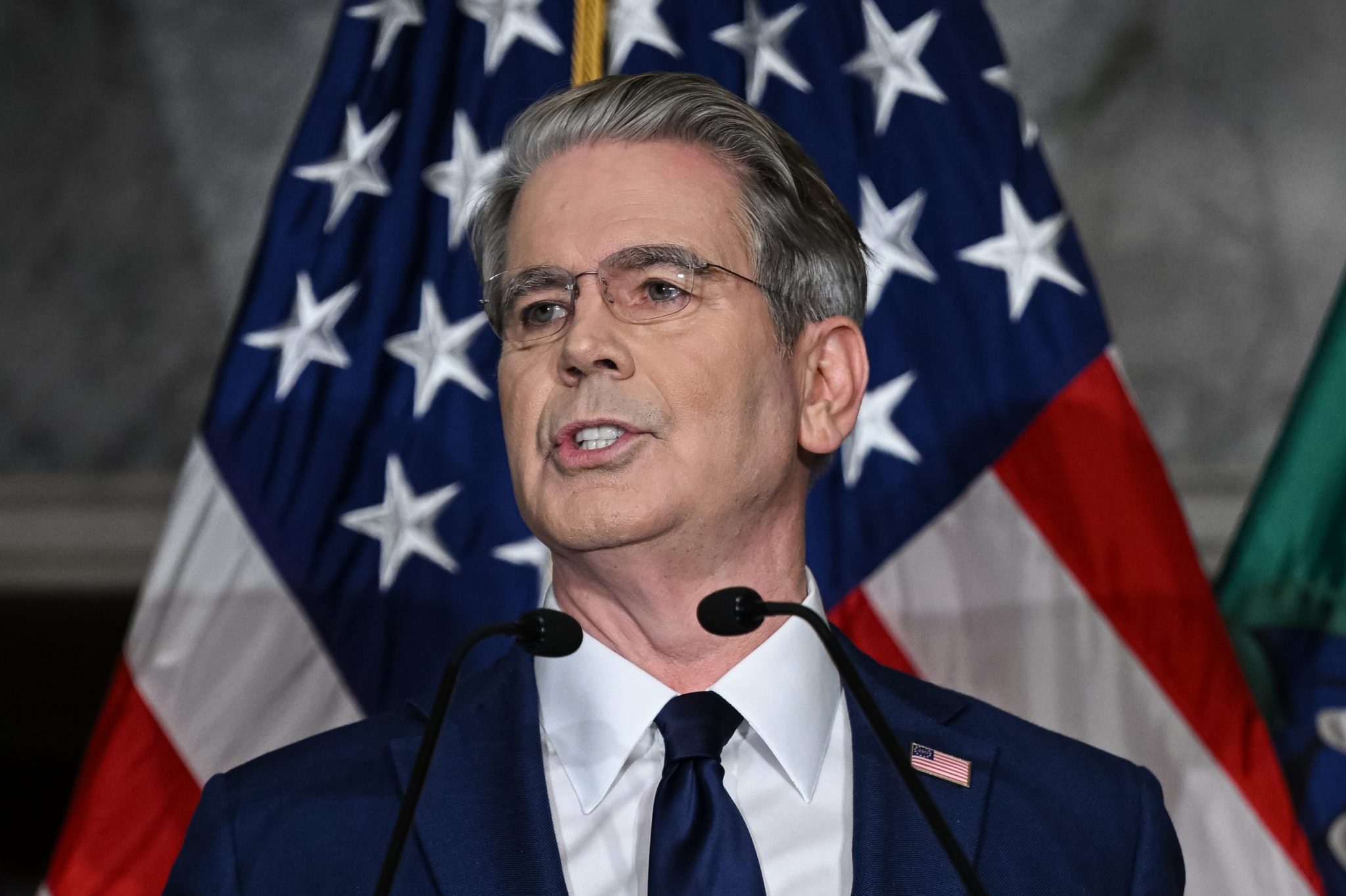
Treasury Secretary Scott Bessent began the week vowing an “economic onslaught” against Iran and its trading partners in a fresh bid to end the war. By the week’s end, countries with ties to Tehran had so far shrugged off the threat and analysts were left underwhelmed by the US actions.
China, which buys 90% of Iran’s oil, issued a defiant warning to Washington rather than back down. Iranian bank branches remained open in Dubai. At one Bank Melli branch in Abu Dhabi, staff were busy typing away and one employee explained that they were still open for business.
Commercial flights also continued between Iran and Turkey as well as Iran and the United Arab Emirates, which had promised last week to sever all trade and financial transactions with Tehran. Routes flying to Thailand and Azerbaijan, as well as multiple destinations in both Russia and China, remained unaffected.
As the week came to a close, the US announced plans to sanction the UAE-based branches of Egypt’s Banque Misr. That fell well below expectations after Bessent’s warning that the world would see “a major announcement of a financial institution being sanctioned by the end of this week.”
“As the war passes the six-month mark, the public actions taken by the Treasury Department this week do not match the hype,” said Alex Zerden, a former US Treasury official and founder of Capitol Peak Strategies.
“Operation Economic Outcast is a continuation of 47 years of restrictive economic measures against Iran but does not provide a clearer theory of economic or military victory in this current campaign,” Zerden said.
The Treasury Department didn’t respond to a request for comment on Friday.
Bessent’s threats — and the collective global shrug so far — underscore the Trump administration’s main conundrum as it seeks to sanction Iran into meeting its demands. Any effective sanctions campaign would need to hit China, a move that risks sparking retaliation and potentially massive global economic fallout. Anything less would add to Iran’s economic pain but not enough to budge its strategic calculus.
US credibility is also at stake. Bessent repeatedly compared the US response to the historic 1944 D-Day landings in Normandy, France — a coordinated land and air invasion aimed at toppling the Nazi regime. But the US acted unilaterally with its latest move, pressuring other countries rather than working with them, and Bessent openly acknowledged that going too fast and too hard risked tanking the global financial system.
Read More: US Moves Against Egyptian Bank’s UAE Branches Over Iran Ties
Further muddying the picture, Bessent also said the US was engaged in “quiet diplomacy” to get its way. US officials turned to counterparts in the UK asking for a statement of support, according to people familiar with the matter.
The Treasury chief is also expected to speak with fellow finance ministers this weekend at a Group of 20 gathering in Asheville, North Carolina. One of the biggest questions attendees will likely have for Bessent is whether the US is willing to hit a Chinese financial institution, according to Josh Lipsky, chair of international economics at the Atlantic Council.
The UAE, a key US strategic ally, said earlier this month it would cut financial ties with Iran. But some flight and banking links with Tehran appear to continue, and the UAE’s government described its move in a statement to Bloomberg News as a “sovereign decision reflecting its strategic assessment of the national interest and the requirements of regional security.”
Asked on Thursday which countries the US had approached so far, President Donald Trump responded, “about Iran? There’s not a lot to speak to. We don’t want to speak to them. We’re not looking to meet or anything.”
“You can’t unleash meaningful economic warfare on Iran while ignoring the one country that absorbs 90% of its oil exports,” said Leland Miller, the CEO of China Beige Book data platform and a commissioner on the US-China Economic and Security Review Commission, which advises the US Congress.
In the meantime, the US appears no closer to ending the war that Trump launched alongside Israel in late February. Iran has endured decades of harsh sanctions and has recently faced a full US Navy blockade of its ports that has dried up oil exports.
Officials in nations that have traditionally had strong economic links with Iran have not heard much from the US this week. Turkey has not received any formal guidance from the US on the restrictions and how they apply to Iran, according to people familiar with the matter. But they believe they’ll have adequate time to discuss and implement requirements once they are informed, they said.
The response from Pakistan indicated that even countries with close ties to the US are feeling little immediate pressure from the new campaign, at least so far.
While Islamabad has won praise from Trump for its mediation efforts to end the war, there was no indication that its overland trade with the Islamic Republic — such as in rice and mangoes — had slowed down. Pakistan’s Foreign Ministry spokesman Tahir Andrabi told reporters this week that the country “is not obliged” to respond to unilateral sanctions.
“The idea Iran can be knocked out with this is risible — it’s not going to move the needle,” said Stephen Fallon, principal adviser at DBM Consulting. “It’s not possible to get a completely airtight seal on this thing. There are too many actors, and it’s too rewarding for the people involved.”
#World #shrugs #Bessents #DDay #Iran #sanctions #threat